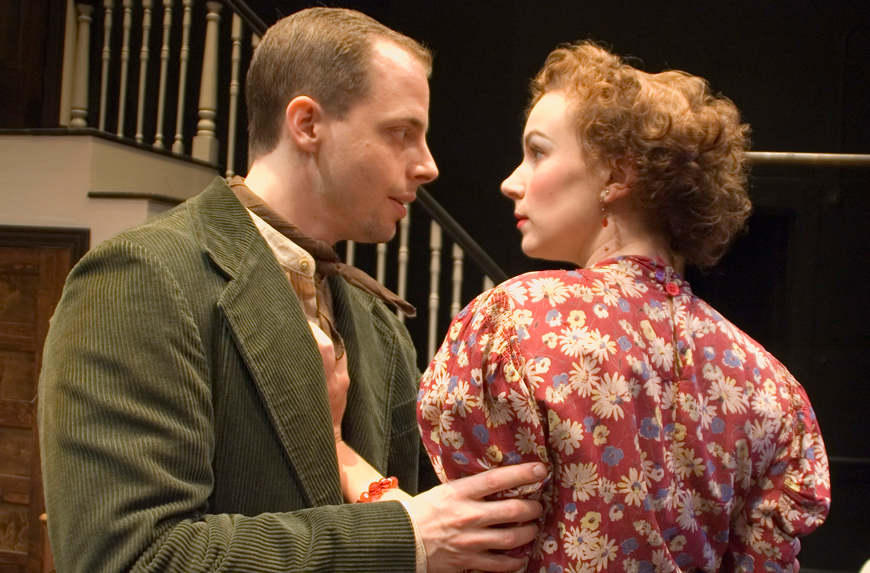
'Paradise Lost' at TimeLine Theatre
by Dan Zeff
published August 27, 2007
ILLINOIS WIRE
The show gets a rating of 3 1/2 stars.
Clifford Odets was the hot button American playwright of
the 1930's, but by the start of World War II he had left the stage for
Hollywood and gradually disappeared from the theater scene. Odets was
largely neglected by a generation of American theaters and audiences, but he
has undergone some serious reclamation in recent years, at least among
Chicagoland theaters.
In the early 2000's, area playgoers have enjoyed strong revivals
of such Odets classics as "Awake and Sing!", "Rocket to the Moon," and "Golden Boy." The TimeLine Theatre has been in the forefront of the Odets
renaissance, currently adding to the luster of its restaging of the Odets
canon with a revival of the playwright's lesser regarded drama, "Paradise
Lost."
"Paradise Lost" opened in 1935, shortly after Odets had set the
American theater on its ear with his "Waiting for Lefty" and "Awake and
Sing!" The dramatist believed the play reflected some of his best writing
but the show got mixed reviews and had a disappointing run. The TimeLine
certainly has given the drama every chance to shine, with an exemplary cast
and insightful directing by Louis Contey, an old hand with an Odets script and the best director of realist modern dramas in the area.
It¹s easy to see how the play disappointed critics and audiences
primed in 1935 for a hit on the level of "Awake and Sing!" First, "Paradise
Lost" has too many characters, 19 in all, giving the play an overstuffed
feeling. The scene is familiar Odets ground, a family in New York City
struggling during the Great Depression, but there is no plot, just a
continuous series of crises and disasters. "Paradise Lost" displays plenty
of compassion for its hapless characters, but there is little humor, at
least in the TimeLine version. Instead, the atmosphere is saturated with
frustration, bitterness, anger, and betrayal. There are some powerful
moments of high drama, but there are also cloying interludes of soapbox
speechifying.
The action takes place in the home of Leo Gordon, a middle class
businessman who designs handbags for a small company he operates with his
partner, Sam Katz. The congested household includes Leo's wife Clara, their
sons Julie and Ben, and their daughter Pearl. Sam Katz and his wife Bertha
live upstairs. Gus Michaels, Leo's friend, is a boarder, along with Gus's
tramp daughter Libby, who marries Julie.
Further crowding the story are Julie's boyhood friend Kewpie,
turned smalltime gangster, and Lucas Pike, a furnace maintenance man
seething with social outrage. Still others move in and out of the story,
like two immigrant workers who demand better working conditions at the
Gordon-Katz shop, a Tammany Hall ward healer named Phil Foley, Pearl's
boyfriend Felix, who leaves her in despair over his prospects as a musician,
and a bizarre character named Mr. May who opening advertises himself as a
man who can save a failing business through arson.
Only the sensible and clear-sighted Clara has a grip on the real
world. Leo is a hopelessly idealistic dreamer, an easy mark for his
embezzling partner. Ben is a former Olympic running champion who is useless
now that his athletic days are over. Julie is dying of sleeping sickness and
the musically gifted Pearl is alone with her beloved piano until even that
is taken from her. Kewpie has an affair with the sluttish Libby while Sam
cheats on his naïve and trusting partner.
It all ends badly for everyone. The economic catastrophe of the
Depression brings down the Gordon family, and all of Leo's fine words about
a brave new world just ahead don't lessen the reality that he and his family
are about to be put out in the street.
The frequently eloquent Odets writing can't conceal the episodic
nature of the narrative and the unrelieved downward spiral of the many lives
on stage. The only character with any money by the end of the play is
Kewpie, and he is filled with self-loathing. Leo is offered money from three
different sources to rescue him from eviction from his home, but he is too
blinded by middle-class pride to accept the desperately needed help.
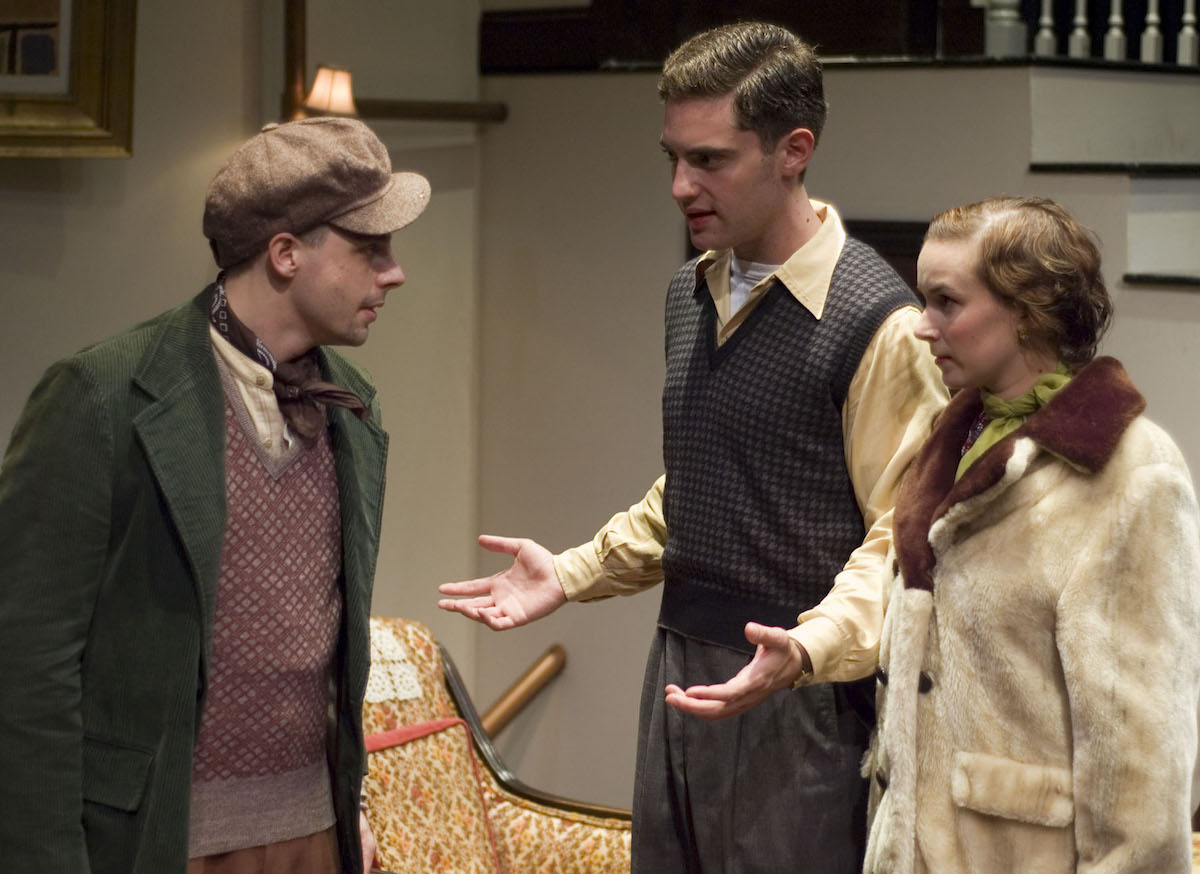
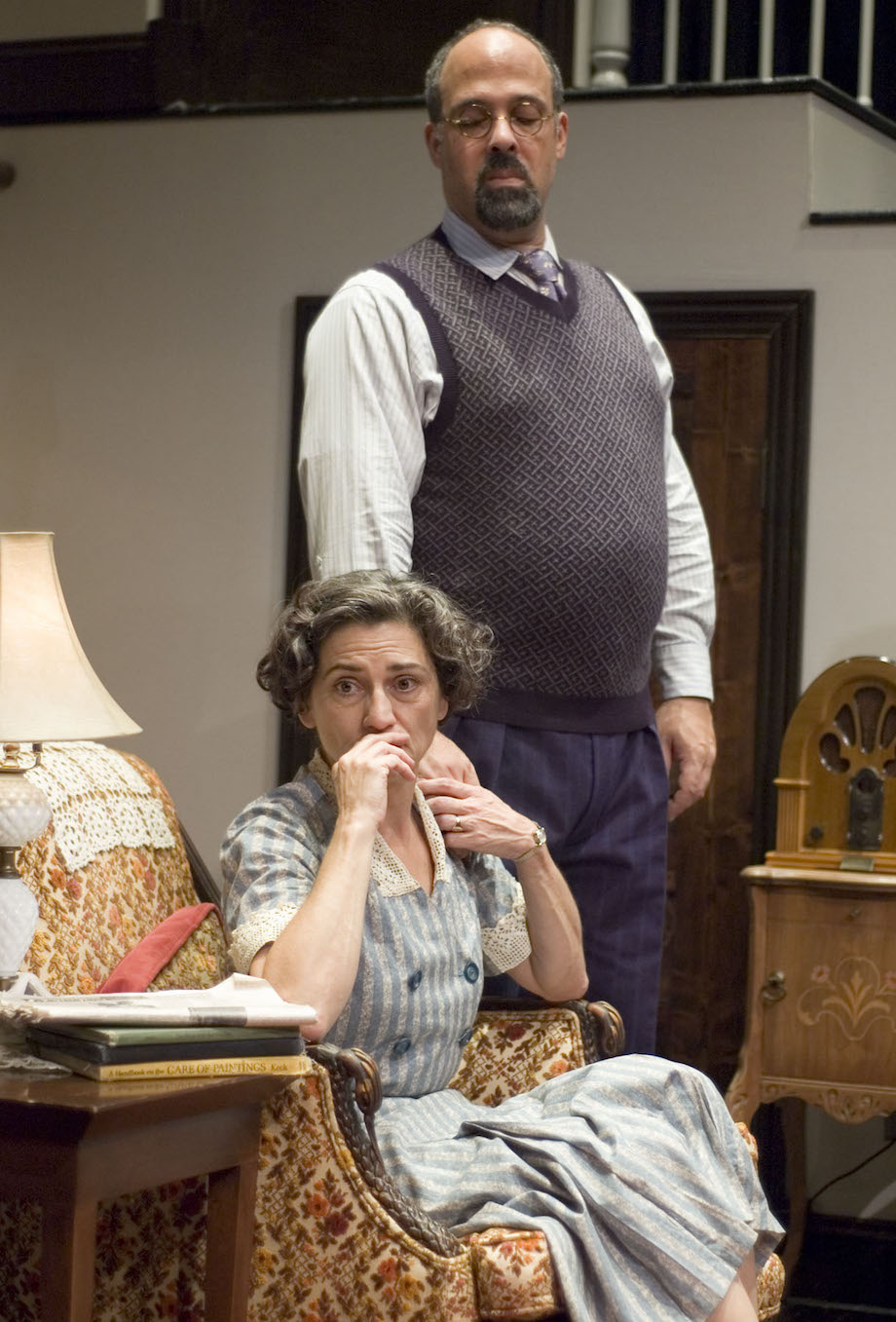
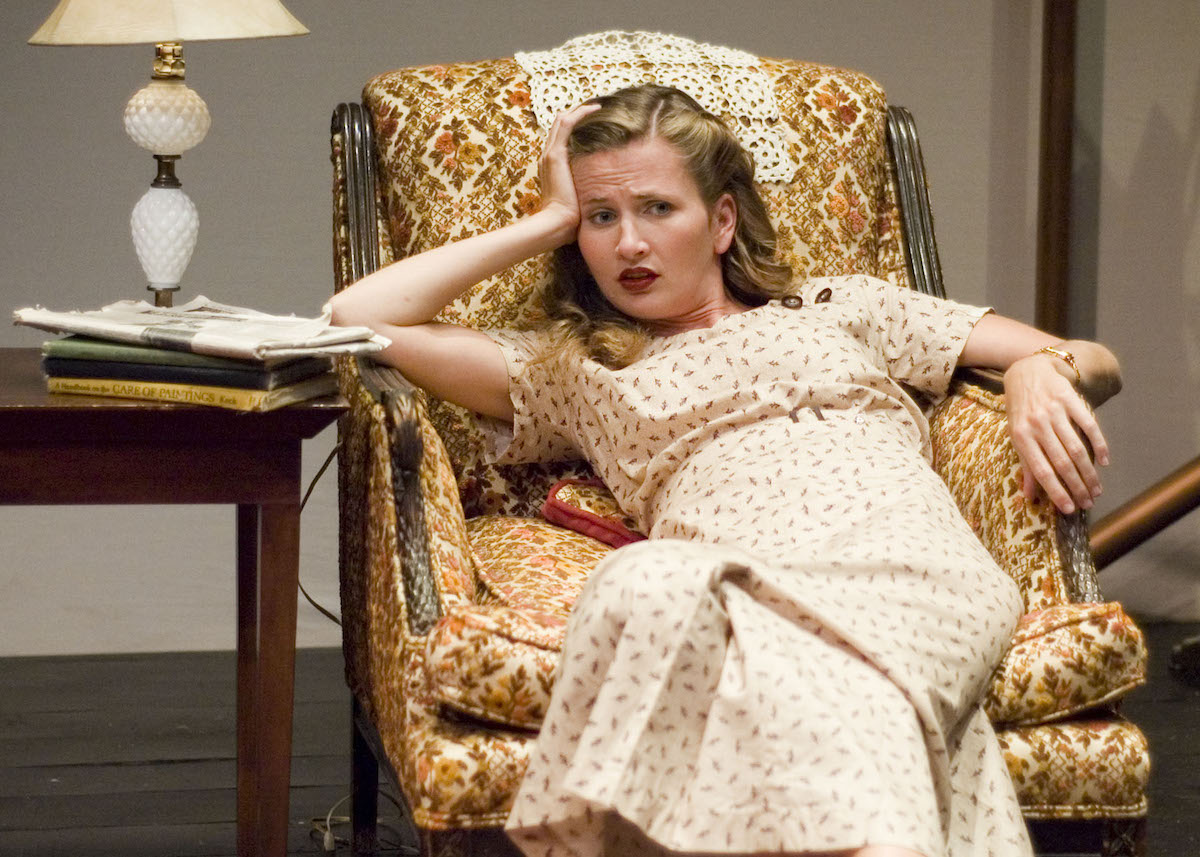
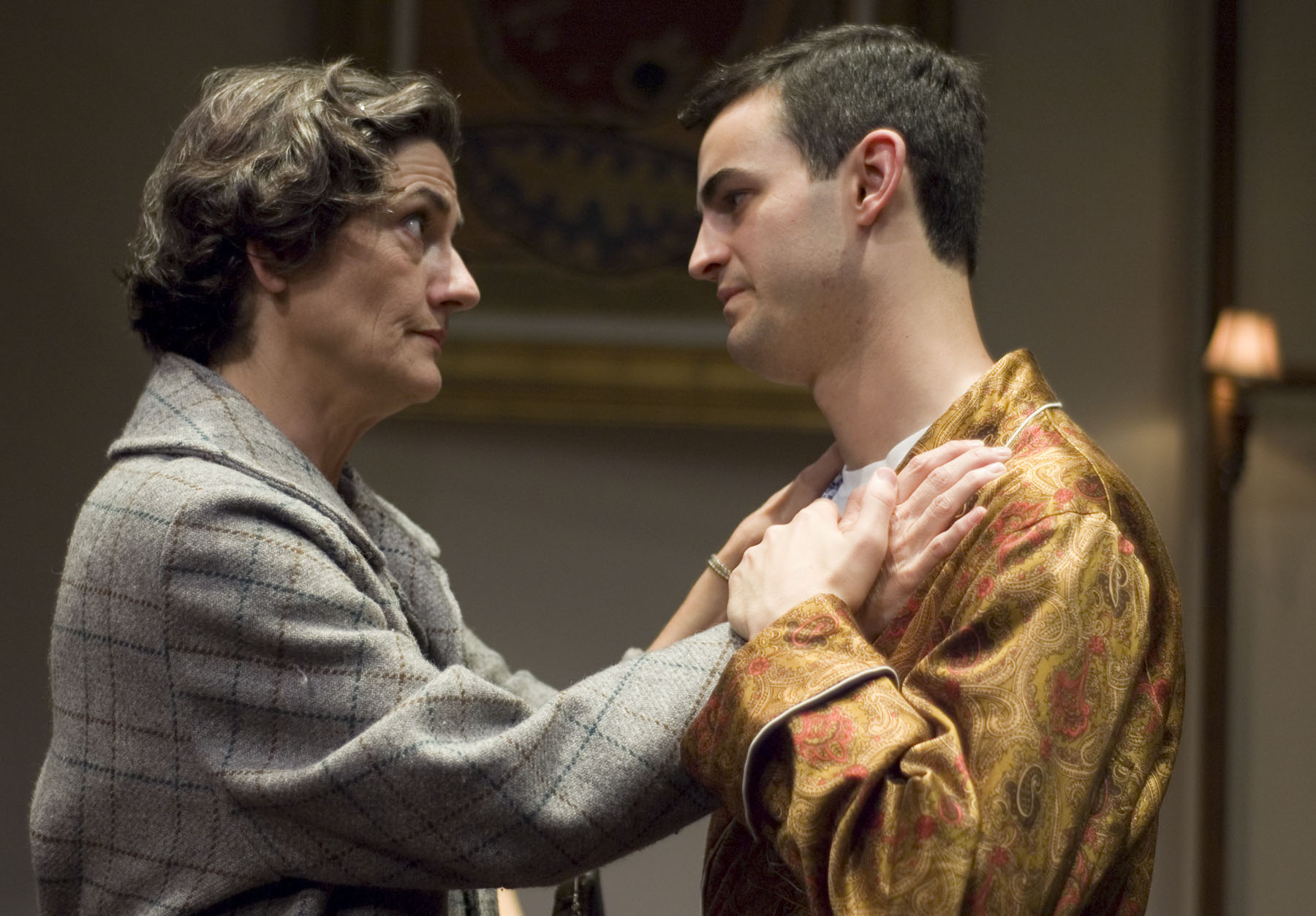
The play may be deeply flawed, but the TimeLine ensemble is
flawless. I don¹t remember when I've seen so many just-right performances in
one production. Each actor, down to the smallest cameo looks and sounds
authentic in his or her role. They all fit snugly in Karen Hoffman's
intimate but visually convincing 1930's parlor set. Alex Wren Meadows has
designed costumes that bring to visual life the frumpy look of the
Depression years. Keith Parham's lighting and Andrew Hansen's original music
complete the spot-on physical production.
As for the acting, 14 performers take on the 19 roles and they
all bring their characters to vivid and sometimes tragic life. The honor
roll starts with Michael Kingston as Leo and Janet Ulrich Brooks as Clara
and continues with Aaron Golden (Ben), Jurgen Hooper (Julie), Mechelle Moe
(Pearl), Brian McCartney (Sam Katz), Angela Bullard (Bertha Katz), Scott
Aiello (Lucas Pike), Jeremy Glickstein (Kewpie), Tien Doman (Libby
Michaels), Whit Spurgeon (Gus Michaels), with Craig Degel, Clayton Smerican,
and Hanlon Smith-Dorsey in minor but telling parts. Louis Contey orchestras
the large cast and incident-jammed script with his usual keen eye and ear
for credible realism.
"Paradise Lost" is no rescued classic, but it's a play worth
doing and worth seeing. Connoisseurs of impeccable ensemble acting should be
the first in line to buy tickets.
|