TimeLine Theatre Company  
Current SeasonTicketsDirectionsDonate
HomeThe CompanyProduction HistoryWork with UsContact Us
Production History
Current Season


An interview with playwright Masha Obolensky


Purchase tickets
to Not Enough Air

Buy tickets now online!

— or call —
773.281.TIME

CLICK HERE FOR INFO ABOUT
TICKET PRICES, BOX OFFICE HOURS,
GROUP SALES AND MORE ...

— PARKING TIPS — 

— DIRECTIONS — 


Stay up-to-date on TimeLine: SIGN UP FOR OUR
MAILING LIST


TimeLine Artistic Director PJ Powers (PJP) interviewed playwright Masha Obolensky (MO) about the experience of writing her play Not Enough Air.

(PJP) This is your first full-length produced play, yet you’ve had a wealth of theater experience as a performer, director and teacher. How did you turn your attention to playwriting?

(MO) Way back when, I was an acting apprentice at Actor’s Theatre of Louisville, where I was exposed to the work of Anne Bogart, Tina Landau and the SITI Company. I observed Tina developing her play 1969 for the Humana Festival. She wrote the piece throughout the rehearsal process, based on the work generated by her cast. I found it all very exciting, and later when I moved to New York City the first thing I did was to get involved with SITI. Most influential for me was a series of workshops that I did with Tina on Composition, which is a method for creating original work. I was greatly empowered by this work, and I went on to create or be involved with many original theater pieces.

In fact, in writing Not Enough Air, while it was something that I wrote alone sitting in front of a computer, it was greatly motivated by two theater artists, Patricia Chilsen and Allison Dubin, both of whom I had taken a Composition workshop with. In the beginning of my writing process, we would meet weekly to read and discuss. Allison ended up directing the first reading of Not Enough Air, and Patricia read the role of Sophie Treadwell.

Click here to buy tickets to Not Enough Air online

(PJP) How did you first encounter Machinal, the play upon which Not Enough Air is based?

(MO) I think I was looking for monologue material. I used to do a cutting from the character of The Young Woman as an audition monologue. I was immediately drawn to what I read about Sophie in the intro to the play. I was fascinated by the fact that she was both a journalist and a playwright, and I wondered why I couldn’t find any of her other plays — she had written 30 of them — but all I could find was this one. I wondered what happened before and after Machinal.

(PJP) What prompted you to start writing Not Enough Air?

(MO) Again, Allison and Patricia had a lot to do with it. We three wanted to work on something together. I had this idea in the back of my head, and I put it forward. They were into it, so I began. It ended up taking a long time and the three of us did several other projects together before I presented a full draft. Another motivating factor was, I must say, boredom. I was temping back then and had a lot of down time. So, in order to not lose my mind, I wrote.

(PJP) Thanks to our mutual friend Derek Goldman, I happily discovered Not Enough Air in the summer of 2006, when he had you send me an early draft to read. And now, 2½ years later, it will have its world premiere on TimeLine’s stage. Can you talk about how the play has evolved?

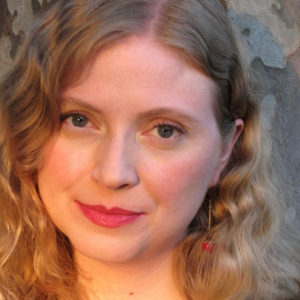
Masha Obolensky
Playwright Masha Obolensky


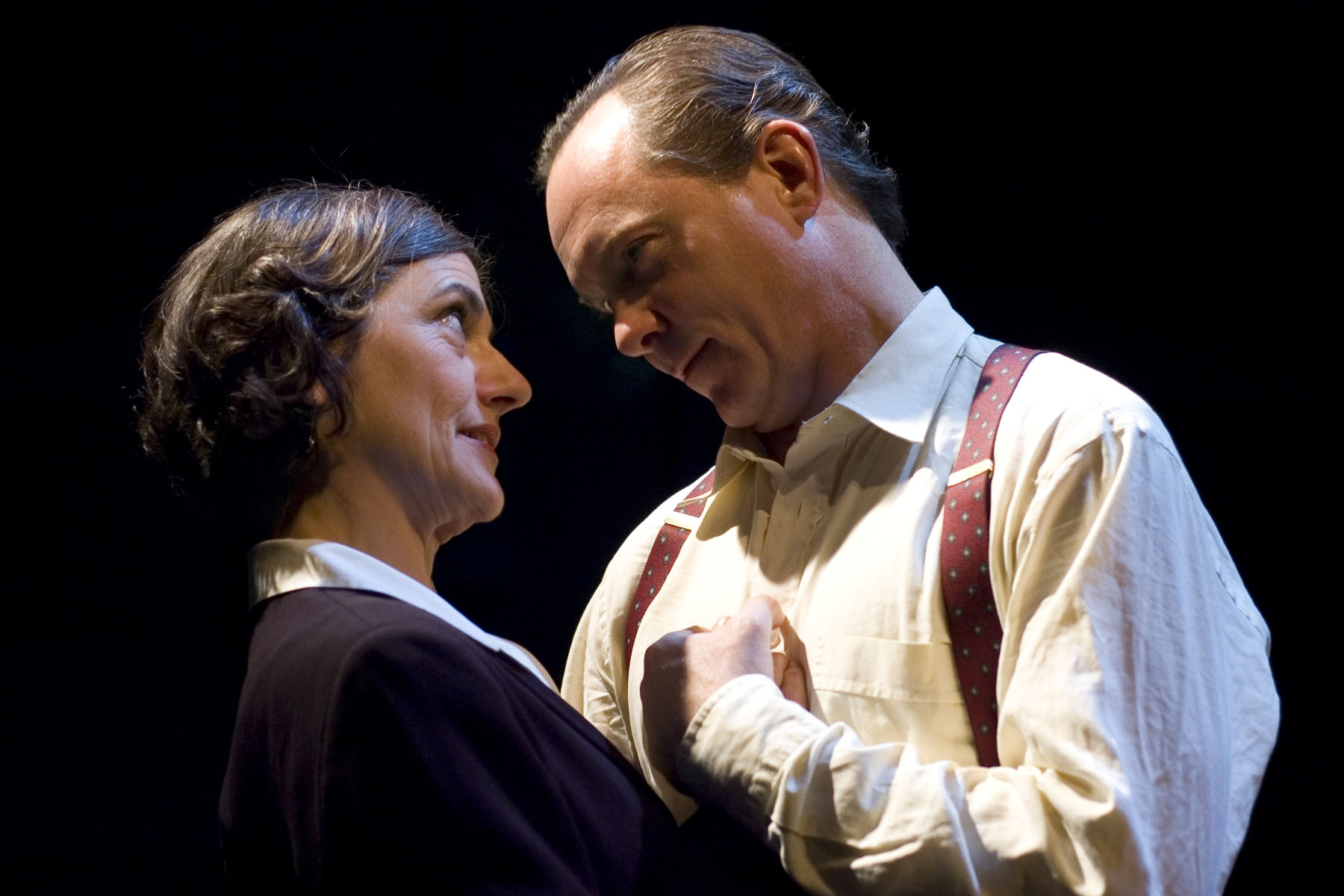
(MO) I have mined this material for years now, and, depending on the time in my life, I have found myself drawn to a different thread in the piece. I was initially most attracted to the Sophie/Young Woman relationship. Then, with my first workshop with TimeLine — which happened at Georgetown University with Derek directing — I found myself putting my focus on Ruth and Sophie. And, because of a conversation we (you, Derek and I) had, I decided to have The Young Woman and Ruth played by different actors. This led to me fleshing out both of these characters more. Then I came to Chicago for another workshop, this time directed by Nick Bowling. Nick was very attracted to the Mac/Sophie relationship. And with Janet and David, there was this great chemistry, so I found myself drawn more to their dynamic.

Really, I was so energized by all of the TimeLine actors, and I was very productive after my visit to Chicago. I had these very vivid voices in my mind that helped me to access new possibilities within all of the relationships. And Nick had taken this big leap by getting parts of the play up on its feet — I had been yearning for that. I had had plenty of readings, but the physical and visual storytelling aspects had not been tried. So that was very enlightening.

(PJP) Stylistically, how did Sophie Treadwell’s expressionistic writing impact the structure of Not Enough Air?

(MO) Treadwell creates this pressurized environment — there is really no breath in Machinal with the exception of one scene — the scene between The Young Woman and her lover. She created this feeling with the use of repetition and charged situation and language, and then also with sound — she used sound for emotional effect. The sounds of the world were written into the play. They are also written into my play — although I mean them to be only suggestions or encouragement for the sound designer to be very involved in the process. I have also tried to create a pressurized environment — one that, like in Machinal, is driven by men, the men are the machine. And then there are brief moments of breath. Also, by having three men play many different parts, this accentuates this machine idea. Even though Mac is this man who holds deep meaning for Sophie, he also steps back into the machine — he is, without necessarily wanting to be, a part of this machine.

My play is different structurally than Machinal, in that Treadwell wrote her play in nine very distinct episodes. I originally tried to mirror that, but it didn’t work for me. But my play has similar abrupt transitions — almost like jump cuts in a film. We are in the New York Herald Tribune offices, then we are in the courtroom, then we are in Sophie’s apartment — again this is meant to be a bit jarring, not flowing or natural. This society is in overdrive, and in order to live in this society, individuals must keep up.

Click here to buy tickets to Not Enough Air online

(PJP) What surprised or intrigued you the most when you started doing research on Sophie?

(MO) I was intrigued by her ability to achieve so much — she was a playwright, journalist, novelist, producer, actor and director in a male-dominated society. I was also intrigued by her illness. She comes across in her journals as fiercely devoted to her work and very determined. She is aware of what she is up against, and she is engaged in the fight. I mean, she was an actor, director, producer and writer because of a need to feel in control. She did not like to be out of control.

But at the same time there was a part of her that was frail — the fight exhausts her, and she is sensitive. She suffers from these “breakdowns” throughout her life. I thought it was interesting that Ruth Snyder also suffered from similar ailments. And then Treadwell wrote the character of The Young Woman as someone who also suffers from “nervous weakness.” Back then it was called neurasthenia. I myself suffer something called “adrenal insufficiency” — from what I can gather, if I had been around back then, I too would have been diagnosed with neurasthenia.

Which makes me think of another intriguing aspect: From the get-go I was intrigued by the fact that Treadwell decided to write a play about Ruth Snyder rather than to cover her story solely journalistically. I liked the idea of a woman interpreting another woman and then bringing myself into the picture — this idea of a woman, interpreting a woman who is in turn interpreting another woman. And how, in this process, a character is formed that is part imagination, part fact, part autobiography, part message.

There really is so much that was intriguing — her relationship with William McGeehan, their separate residences and their various arrangements.

(PJP) Sophie was a woman who continually pushed against the norm and tried to shatter barriers of the status quo. If she were around today, how do you think she’d respond to the current state of journalism and American theater?

(MO) Well, it seems to me that she was concerned with integrity in journalism — the Ruth Snyder-Judd Gray trial could be considered the first celebrity trial. Because of the advent of the radio, there was the ability to sensationalize on a large scale. The trial became this dramatic narrative that was often more concerned with being interesting than being truthful or substantive. Ruth Snyder was treated viciously by the media. She really became this evil character in a radio drama: She was totally de-humanized, to the point that on the day of her execution there were crowds of people wearing pins and holding up signs, all very angry, and chanting “Execute her.”

It seems that Treadwell was always looking for the human element in her stories, and she went after stories that meant something to her and then dug very deep. So if the Snyder-Gray trial was disturbing to her, who knows what she would think of all our celebrity trials. And then since 9/11 when many across the country experienced the horror on television, I think our expectations that the news be a compelling and even entertaining narrative has only worsened. I think Sophie might find that aspect of our media to be upsetting.

But, then again, there are so many outlets for news today, she could get her voice heard — she was a big journal writer, maybe she’d even have her own blog.

And then, theater … Well, there recently was an article in The New York Times about the nationwide bias against female playwrights — looking at the Off-Broadway 2008-09 season, men are being produced at the largest institutions at four times the rate that women are. So Sophie Treadwell would still be up against a lot.

(PJP) With our mission of doing plays inspired by history, I’m always curious to see how playwrights use historical research in the writing of their plays. How has it been for you?

(MO) I did a lot of research in the beginning. Treadwell’s papers are kept at the University of Arizona, so I went to Tucson and had just amazing access to all of this material. But after doing the research, I really sort of left it behind.
I decided that I wanted to create my own character of “Sophie” and that while she was inspired by the real Sophie Treadwell, she is really a fictional creation. Like with Machinal, the character of The Young Woman shared a lot of the same circumstances as Ruth Snyder: She was a stenographer, stuck in a loveless marriage to an older man, she had a strained relationship with her mother, committed murder with her lover, etc. But The Young Woman was not Ruth Snyder, she was her own thing. Same thing here. I have tried to get at the essence of this woman, but I am not trying to specifically educate people about the life of Sophie Treadwell.

(PJP) What’s coming up next for you?

(MO) I am getting my MFA in Playwriting at Boston University. And I am working on a play that also takes place in the 1920s in America and is an exploration of girls’ sexual desire and the physical and social consequences that come with acting on that desire.

Click here to buy tickets to Not Enough Air online