
Not Enough Air
World Premiere
Jan 21, 2009 - Mar 22, 2009
-
Nick Bowling ~ + Diretor

- Masha Obolensky Playwright
Cast
-
Janet Ulrich Brooks * + Sophie Treadwell

-
Mechelle Moe + The Young Woman

-
David Parkes * + Man #3
-
Danica Monroe ^ Ruth Snyder

-
Terry Hamilton * ^ Man #3

- Zach Kenney Man #1
Production Team
-
Ana Espinosa * Stage Manager

-
Brian Sidney Bembridge # ^ Scenic

-
Andrew Hansen ^ Composer and Sound Designer

-
Eva Breneman ^ Dialect Coach

-
Maren Robinson + Dramaturg

- James Keister Lobby Display Graphic Designer
- James Ogden Production Manager and Technical Director
- Lindsey Pate Costume Designer
- Heather Gilbert # Lighting Designer
- Scott Flores-Deter Assistant Stage Manager
- Bill Paton Assistant Lighting Designer
- Mac Vaughey Master Electrician
- Kristin Eaves Wardrobe Supervisor
- Robert Coleman Graphic Designer
Understudies

* Member of Actors Equity Association
# Member of United Scenic Artists
~ Member of Stage Directors and Choreographers Society
+ TimeLine Company Member
^ TimeLine Associate Artist
§ TimeLine Playwrights Collective
Discussions & Events
-
Sunday Scholars Series
February 8, 4:30 pm Read More

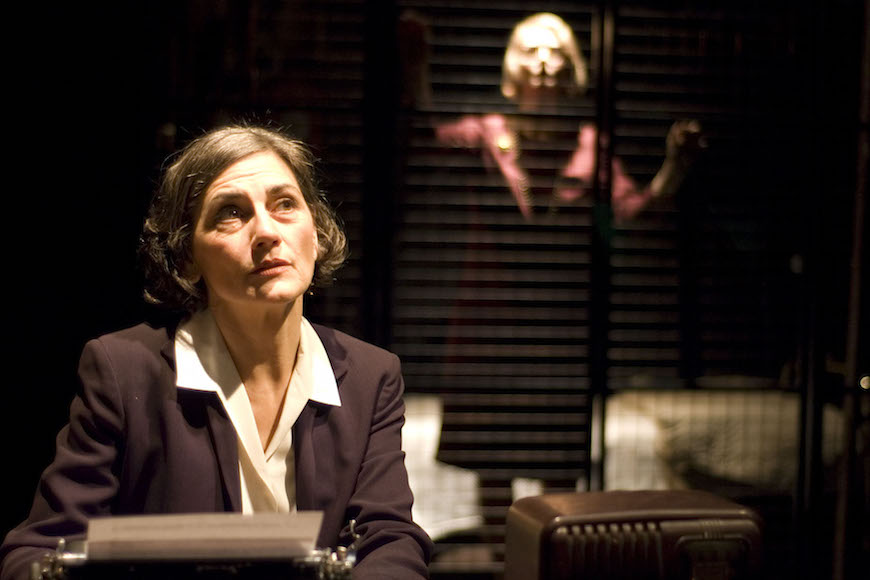
Sophie Treadwell (Janet Ulrich Brooks, left) is drawn into the real-life murder trial of Ruth Snyder (Danica Ivancevic, right) and is inspired to write the landmark play MACHINAL, in TimeLine Theatre’s world premiere production of NOT ENOUGH AIR by Masha Obolensky, directed by Nick Bowling.
Photo by Lara Goetsch

Sophie Treadwell (Janet Ulrich Brooks, left) has an unconventional relationship with her husband William “Mac” McGeehan (David Parkes, right) in TimeLine Theatre’s world premiere production of NOT ENOUGH AIR by Masha Obolensky, directed by Nick Bowling.
Photo by Lara Goetsch

Sophie Treadwell (Janet Ulrich Brooks) is torn by the success of her play Machinal in TimeLine Theatre’s world premiere production of NOT ENOUGH AIR by Masha Obolensky, directed by Nick Bowling.
Photo by Lara Goetsch

Janet Ulrich Brooks as playwright Sophie Treadwell in TimeLine Theatre’s world premiere production of NOT ENOUGH AIR by Masha Obolensky, directed by Nick Bowling.
Photo by Lara Goetsch