TimeLine has partnered with Court Theatre and Remy Bumppo Theatre to present Fugard Chicago 2010. Visit for details, ticket discounts and more.
by Dan Zeff
published January 24, 2010
3 1/2 STARS
By a coincidental bit of scheduling, three major Chicago
theaters are offering plays by South African dramatist Athol Fugard on their
2009-2010 subscription schedules. The TimeLine Theatre gets the mini Fugard
festival off to a stirring start with its revival of the 1982 play ”Master
Harold” and the Boys.” The Remy Bumppo Theatre will follow with “The Island”
(January 27-March), followed by the Court Theatre’s “Sizwe Banzi Is Dead”
(May 13-June 13).
Fugard’s plays are not only artistic successes but personal acts
of courage. His works attacked the South African official policy of
apartheid when opposition to the racial segregation laws was perilous for
one’s physical wellbeing. But Fugard, who is white, persevered, establishing
a tremendous canon of plays that hold up even after apartheid was abolished,
at least officially, in South Africa.
Most of Fugard’s plays are miniatures, with comparatively short
running times and small casts. They are personal works, dealing with average
people caught on one side or the other of the corrupting moral and
psychological effects of apartheid. The plays are humane (though laced with
some humor), and speak with a soft voice without diminishing their
indictment of apartheid’s cruelty and injustice.
”Master Harold” is a one act drama that runs about 95 minutes.
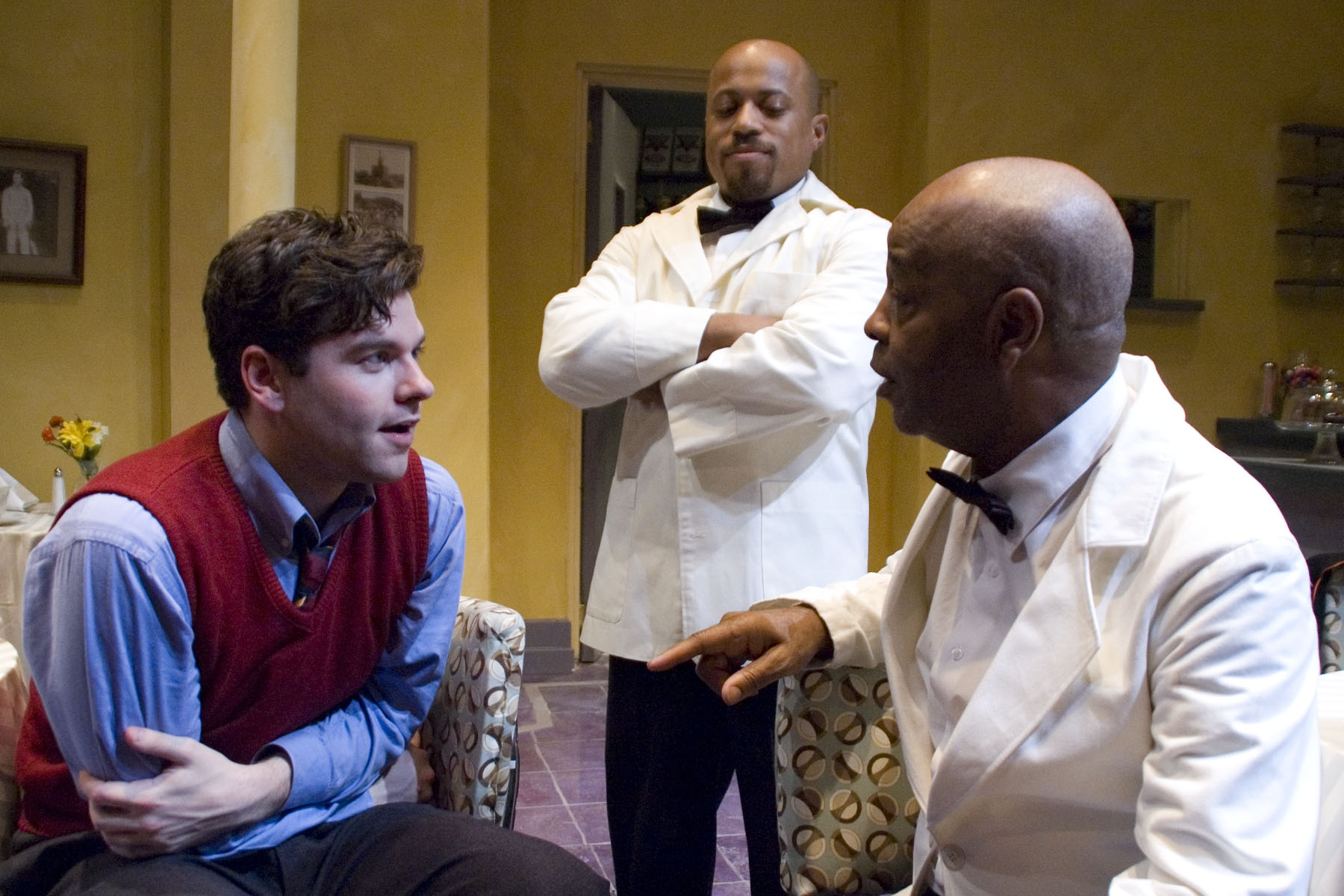
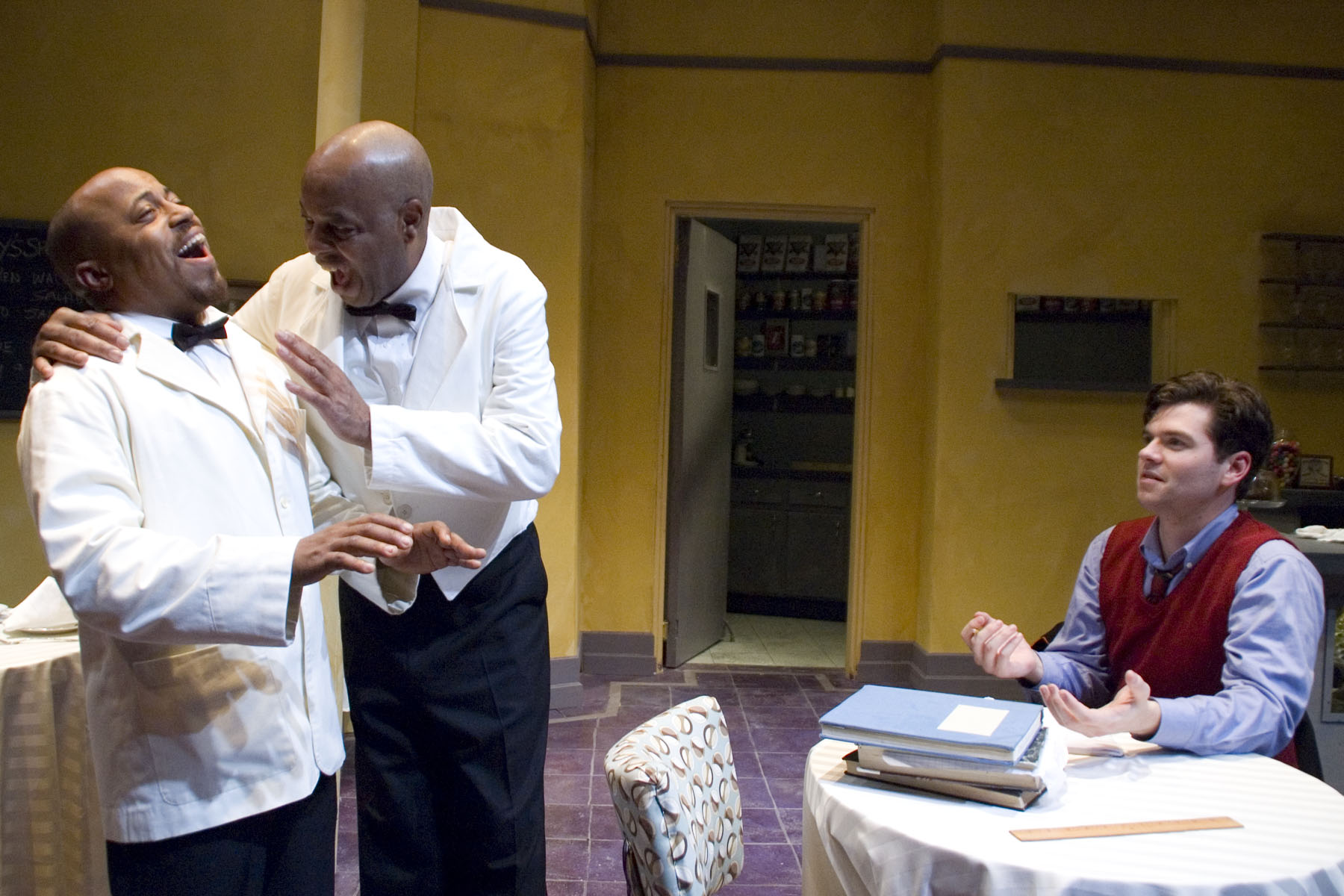
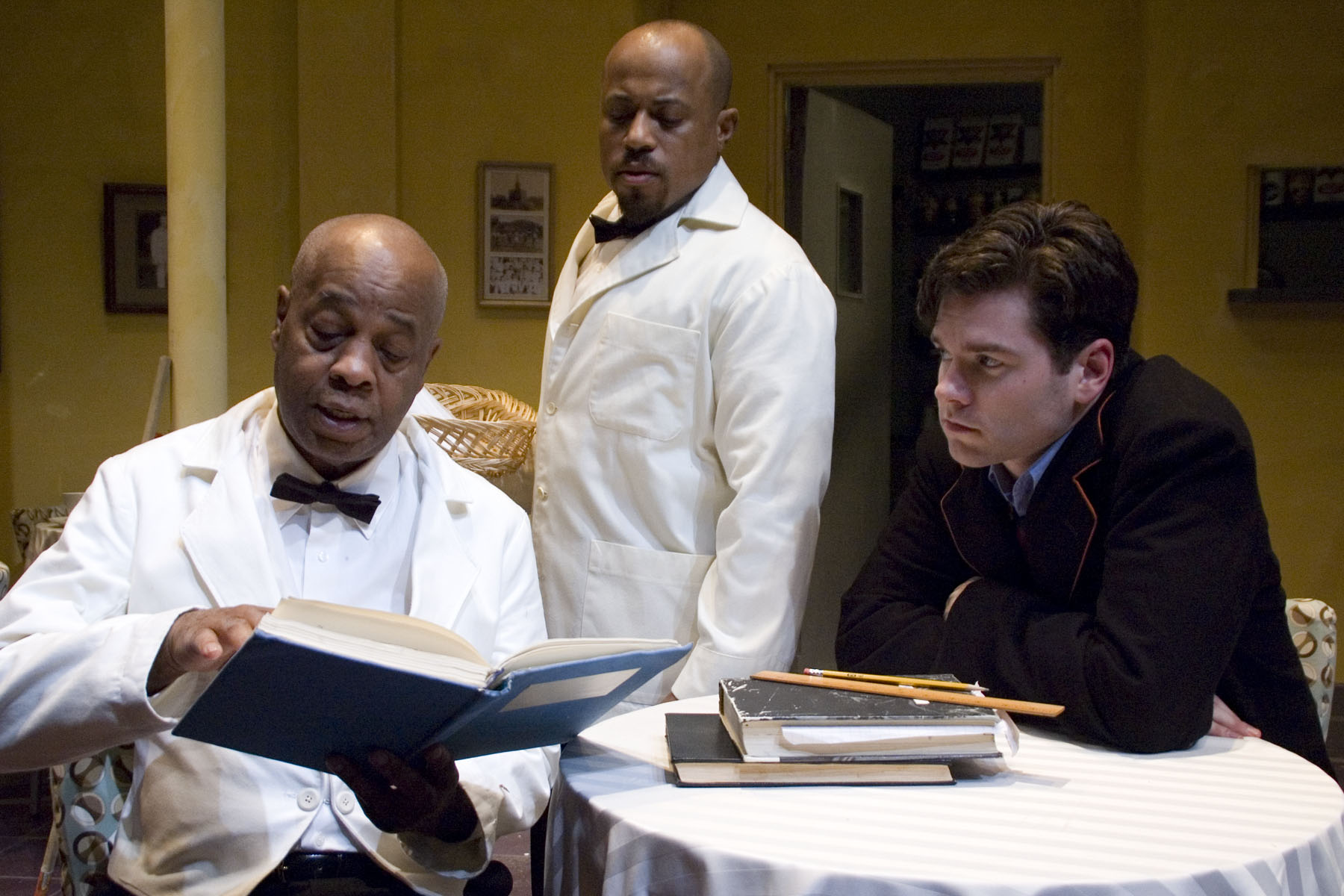
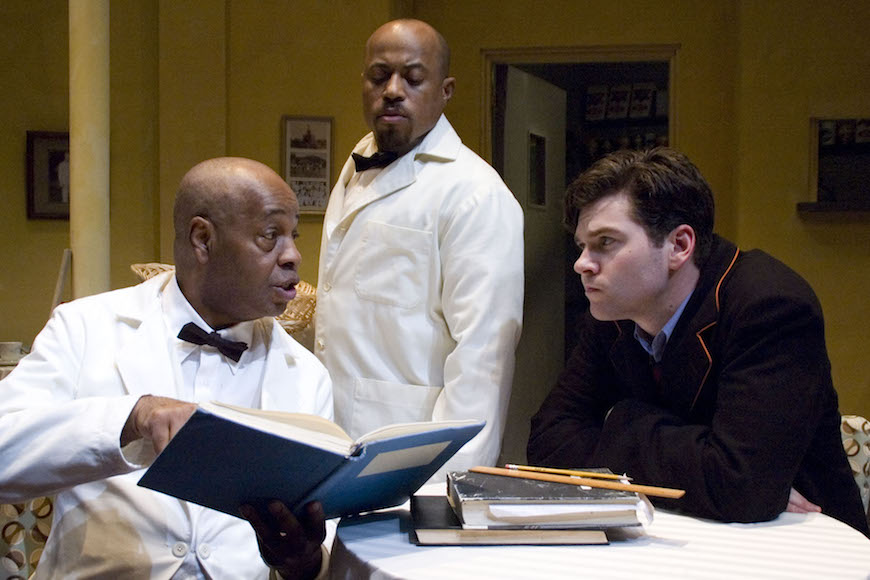
It has three characters and one setting, the St. George’s Tea Room one wet
and windy afternoon in 1950 in Port Elizabeth, South Africa. The characters
are a pair of black tearoom waiters named Sam and Willie and a white
teenager named Hally, the son of the establishmeny’s proprietors.
The first two-thirds of the play is devoted to deceptively casual banter,
first among the waiters with Hally joining in on his way home from school.
Hally is an intense, lonely lad carrying the burden of a wretched home life
dominated by his crippled, alcoholic father. The father has been
hospitalized, allowing Hally some respite from the man’s drunken
disturbances. A phone call from his mother tells Hally the hospital is
releasing the father back to his home. The news plummets the youngster into
despair, leading to his explosion of anger towards Willie and especially Sam
during the play’s disturbing final minutes.
Until he gets the bad news about his father’s release, Hally has
been spending his time reminiscing with the waiters about younger and
happier days, like when Sam built Hally a kite as a symbol of their
friendship and to give the boy an object of pride and accomplishment. Yet
apartheid intruded even in this happy moment. Sam is not allowed to enjoy
the kite’s flight with Hally because the boy was sitting on a park bench
reserved for whites only.
After getting the news of his father’s release, Hally turns
verbally vicious toward the waiters, spewing racist invective climaxed by
spitting in Sam’s face. This profane act ends the nurturing relationship
between Hally and Sam and the play ends moments after the desolate and
ashamed boy leaves the tea room.
“Master Harold” requires realistic performances and directing of
perfect pitch or the story will meander for an hour before a sudden rush to
emotional meltdown. The character of Sam oozes so much folk wisdom and
dignity that the man threatens to become a metaphor rather than a human
being. As Sam, Alfred Wilson deftly sidesteps the pitfalls of excessive nobility with a terrific performance grounded in truth and sympathy. One can
see how Sam could become a surrogate father for Hally over the years and
grasp what a catastrophic loss his companionship and quiet paternal care
will be for the young man in the future.
Daniel Bryant handles the superficially minor role of Willie
with humor and his own intensity. Through long swatches of the play Willie
silently folds napkins and sets the tables in the tearoom, but he is always
in character, listening intently to the conversation between Sam and Hally,
thinking his own thoughts. Spectators who tear themselves away from Sam and
Hally to observe Willie will receive a textbook lesson in establishing a
credible character through understated facial expression and body language.
Nate Burger takes on the daunting role of Hally with his own
blend of intensity and assurance. Burger is a senior at Loyola University
and it’s not his fault that he looks about three years too old for the
character. Hally is 17 and his youth accentuates his vulnerability and sense
of inner confusion. Burger’s more mature appearance robs the character of
its youthful turbulence, but with that demurrer Burger delivers a strong
performance, especially for an actor of limited stage experience.
Director Jonathan Wilson, who takes over the role of Sam after
February 28, orchestrates the performances with a keen eye for the revealing
small talk that escalates into the explosive final minutes. The pace is just
right (though the script could be trimmed by 10 minutes), and the ending
should leave the attentive viewer shocked and dismayed.
Timothy Mann has designed a functional and credibly detailed
realistic setting of the modest tearoom. Alex Wren Meadows designed the
costumes, Heather Gilbert the lighting, and Christopher Kriz the sound.
Although it explores an outrageous situation, “Master Harold” is
not an exercise in fist waving social protest. It explores prejudice with an
understatement that in no way diminishes intolerance’s insidious evil. The
TimeLine production does right by the play with its thoughtful, incisive
acting and directing.