TimeLine Theatre Company  
Current SeasonTicketsDirectionsDonate
HomeThe CompanyProduction HistoryWork with UsContact Us
Production History
Current Season


Back to 'Master Harold' home ...


Purchase tickets
to 'Master Harold'

Buy tickets now online!

— or call —
773.281.TIME

CLICK HERE FOR INFO ABOUT
TICKET PRICES, BOX OFFICE HOURS,
GROUP SALES AND MORE ...

— PARKING TIPS — 

— DIRECTIONS — 

   
  Fugard Chicago 2010

TimeLine has partnered with Court Theatre and Remy Bumppo Theatre to present Fugard Chicago 2010. Visit FugardChicago.org for details, ticket discounts and more.


Focus on Fugard
Three companies on the same page
in bringing South African's plays
to local stages

by Hedy Weiss, Theater Critic
Chicago Sun-Times

published January 17, 2010

Between 1948 and 1993, the majority black and “colored” populations of South Africa lived under the strict and brutal system of racial separation known as apartheid.

But almost from the start, there were white artists and other brave activists who linked their destinies with the oppressed, often putting themselves at risk for censorship, prison or worse in their opposition to the system.

Among the most formidable was the playwright Athol Fugard, the son of an Afrikaner mother and English father whose widely acclaimed dramas — including “‘Master Harold’... and the Boys,” “The Island,” “Sizwe Banzi is Dead,” “The Blood Knot,” “Boesman and Lena” and “The Road to Mecca” — served as uniquely potent evocations of the spiritual and social catastrophe that was apartheid.

During the next six months, three highly regarded Chicago theater companies — TimeLine, Remy Bumppo and Court — will be producing revivals of three major Fugard plays — “Master Harold,” “The Island” and “Sizwe Banzi,” respectively. And though their choice of these plays began as sheer happenstance, the three companies have joined forces to create something of a mini-festival that has been dubbed “Fugard Chicago 2010.”

Fugard, who is now 77, and spends a good portion of each year living and teaching in San Diego so that he and his wife can be near their daughter (writer Lisa Fugard) and grandson, was delighted to learn of the revivals and happy to chat about the roots of his work.

“Unquestionably, the dynamics of the political situation in which I found myself as a young man created a sense of drama, as it does in any repressive country,” he said during a recent phone conversation. “But I also have always been fascinated with language and with figuring out what happens to the spoken word. So all together, that set me up to be a practitioner of the theatrical craft.”

It was in 1958, when Fugard was just 26 (a university dropout who had already spent a couple of years as a merchant seaman and a court clerk), that he boldly organized a multiracial theater in Johannesburg and began work with the late black actor, Zakes Mokae. And it was there that he began writing, directing and acting in plays that suggested how racism had become an all-pervasive, deeply warping psychic landscape for South Africans — a sort of prison of the soul that in one way or another kept both blacks and whites in a state of painful captivity.

Yet while apartheid was unquestionably the immediate catalyst for many of the plays Fugard penned between the late 1950s and early 1990s, what has always made his work exceptional, and what is bound to make it endure for generations to come, is the way he transcended the obvious politics and homed in on the essence of human nature and emotional connection.

In his work, Fugard has invariably conjured searingly intimate situations that had far more to do with individual relationships and power plays than governmental fiats. His plays are, to borrow one of his own titles, about the blood knot — about the primal ties that at once bind people together and tear them apart. And in the years since the formal dismantling of apartheid, he has continued to probe that system’s enduring effects. (The 2005 film “Tsotsi,” which was adapted from Fugard’s novel of the same name and follows a young hoodlum in the Soweto township, won the Academy Award for Best Foreign Language film.)

Fugard is intensely aware of the fact that some might consider his plays “museum pieces” these days, but he believes they remain timely.

“In South Africa, where I still spend a part of each year, the plays remain incredibly relevant,” he said. “Despite all the big changes in my country — starting from the release of [Nelson] Mandela and the amazing turnabout of an oppressive regime to a fledgling democracy — it is still very much in the fledgling stage, with a black government that has taken an approach of total idiocy when it comes to AIDS. And while blacks no longer have special [identity] passbooks, there is still a huge gap in entitlement — and poverty, and the resulting crime, is a major issue.

“‘Sizwe Banzi’ works in every country where bureaucracy governs lives and some people are second-class citizens,” said the playwright. “Living in California, I certainly see how it might apply to Mexican immigrants.”

And a recent incident reported in South Africa suggests how little some attitudes have shifted since the debut of “Master Harold.” Four white male university students made a video to protest racial integration in student housing that showed them feeding stew contaminated with urine to five black cleaners in the dorm. [A new film version of the play is being produced in South Africa, starring Freddie Highmore and Ving Rhames.]

Although Fugard has cut back on his teaching at the University of California-San Diego (“I’m not getting younger and want to have more time to write”), he says he plies his students with the work of the ancient Greek dramatists (“Whether conscious or not, we’re all in the shadow of Sophocles, Aeschylus and Euripides”). And he steeps them in the great American masters Eugene O’Neill, Tennessee Williams and Arthur Miller, who was his “very generous friend.”

In December, “Have You Seen Us?,” Fugard’s first play to be set in the United States (it unspools in a sandwich shop where an academic, a Mexican waitress and an old Jewish couple spend Christmas eve), had its debut at New Haven’s Long Wharf Theatre. And he is about to return to South Africa for another world premiere, in February, of “The Train Driver,” which he also will direct. The play will inaugurate a 270-seat theater, carved out of an old textile warehouse, that is being named in his honor. It’s part of a new development project in Cape Town’s fabled District Six (an area cleared for whites only during apartheid) and will house the Isango Portobello Theatre Company.

As Fugard explained: “It’s inspired by a newspaper story I saw about a desperately poor woman with four kids who was living as a squatter. One day she just stood on a railway track and waited to be hit by a train. The play is a conversation between the white train driver and a black gravedigger.

“I’m a great believer in poor theater — theater that requires no technical wizardry but depends only on the power of the storytelling.”


Directors' notes

Here is what the three directors said about their particular choice of Athol Fugard’s plays:

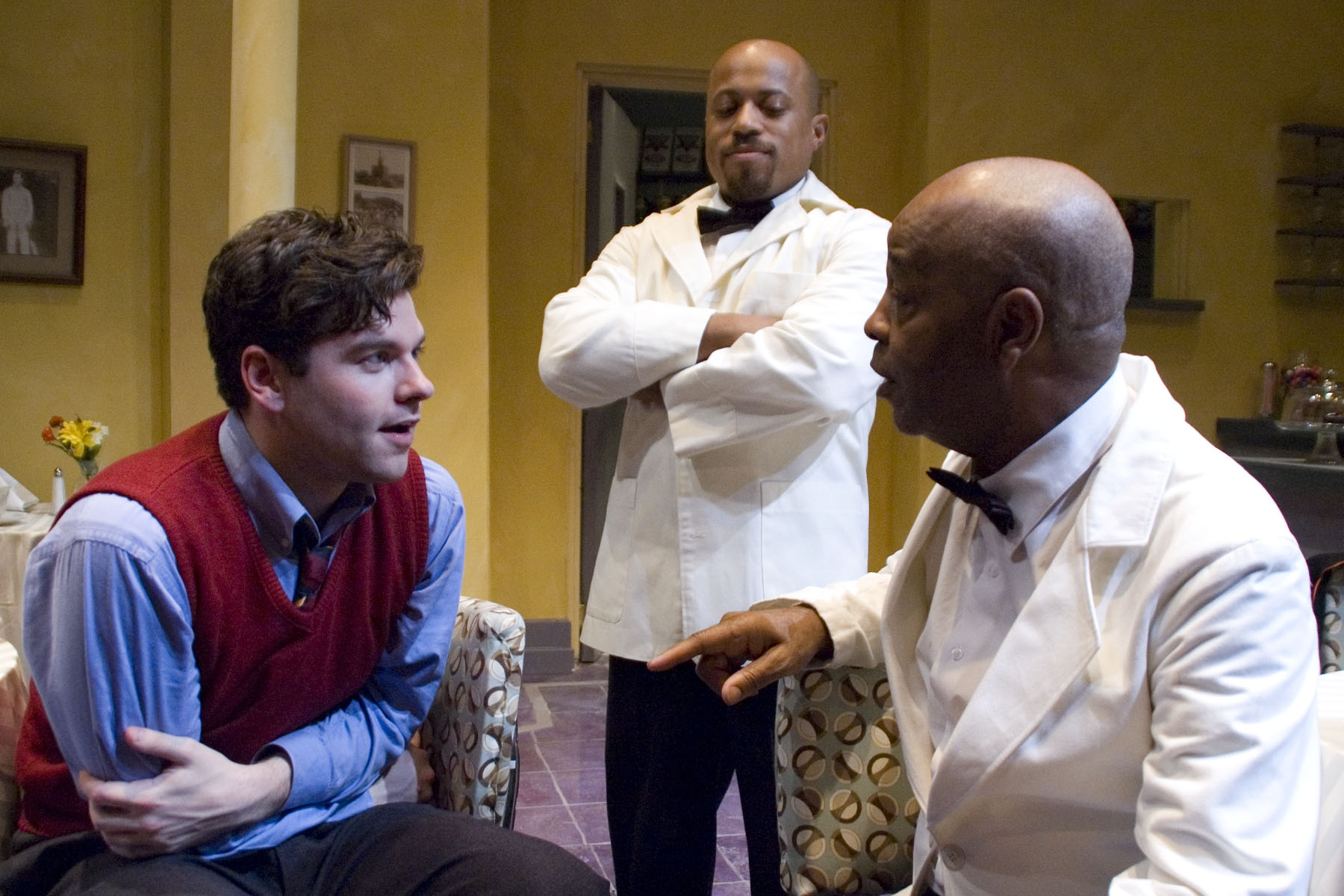
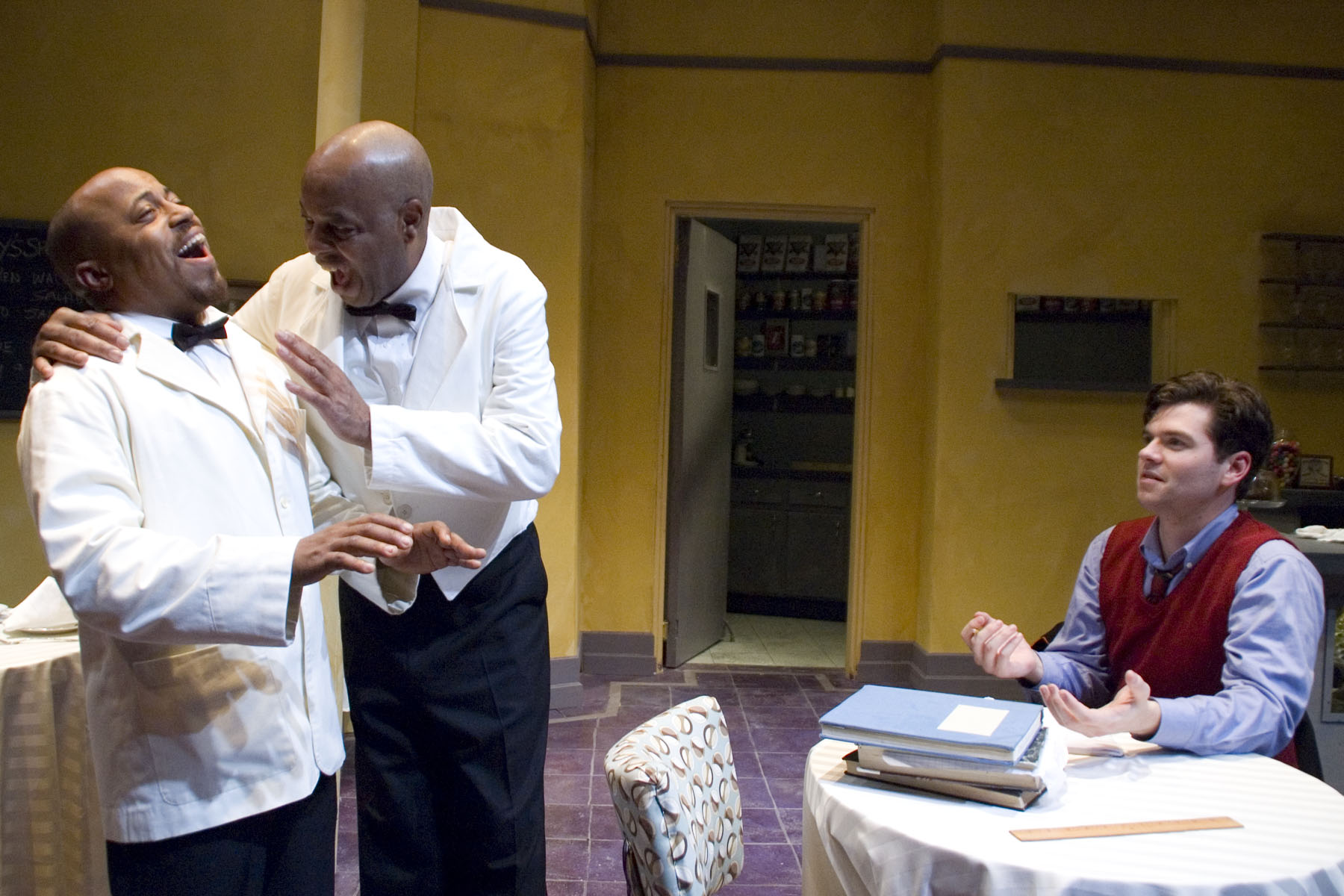
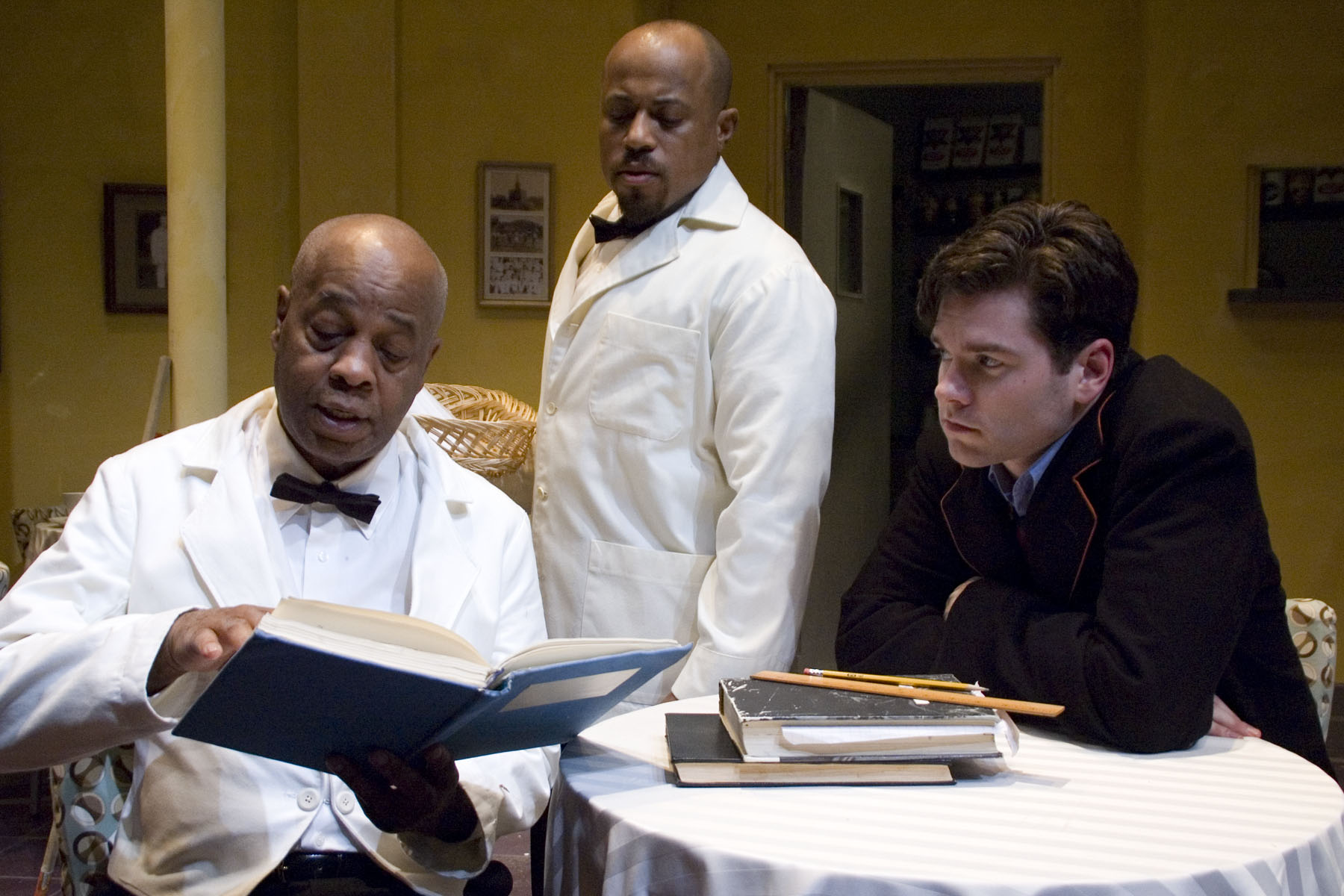
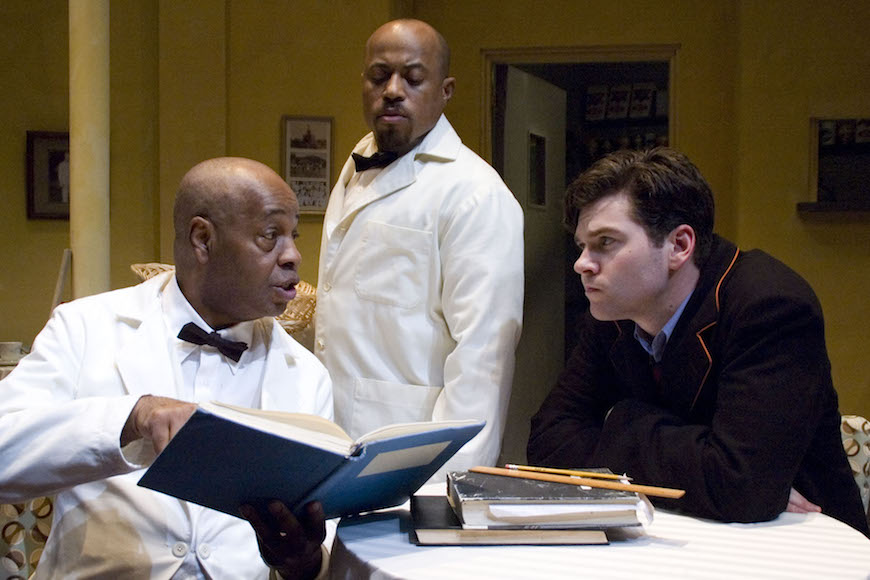
Jonathan Wilson on “‘Master Harold’ ... and the Boys,” the story of an unhappy 17-year-old white South African boy and the two black men who nurture him but finally become the target of his inner rage:

“I am interested in learning about where the seeds of apartheid came from. In ‘“Master Harold” ... and the Boys,’ Fugard seems to suggest that it emanates from the family; specifically, in the relationship between father and son. So I am interested in exploring that relationship in the most autobiographical of Fugard’s plays.”

James Bohnen on “The Island,” about two black men during the apartheid era who by day do hard labor in a prison much like the infamous Robben Island jail where Nelson Mandela was incarcerated, and who by night rehearse a unique version of Sophocles’ anti-authoritarian play “Antigone,” to be shown to their fellow inmates:

“I was lucky to have seen [John] Kani and [Winston] Ntshona perform ‘The Island’ in 2001 in England on the play’s 25th anniversary tour. It was mesmerizing. I had loved the play since first reading it in about 1980. It is one of those few plays that proves the power of great writing/storytelling is for all times and places. And I respond deeply to the personal compassion and determination of the two men. I am moved by ordinary people who find ways to act courageously. I always wonder if I have such courage.”

Ron OJ Parson on “Sizwe Banzi is Dead,” a play written in collaboration with actors John Kani and Winston Ntshona, in which a black man with a photography studio helps a fellow black man forge a new identity in apartheid South Africa:

“I had the opportunity to act in [this play] several years ago, playing both roles, and I am looking forward to working on it again after so many years in the director’s chair. It is one of the plays that influenced me early in my career and made me want to make acting and directing my life’s work. I absolutely believe that the politics and historical significance of ‘Sizwe,’ and all of Fugard’s plays, is still very relevant to us as a people.”