Back to The History Boys ...
Donald Brearley - An Interview
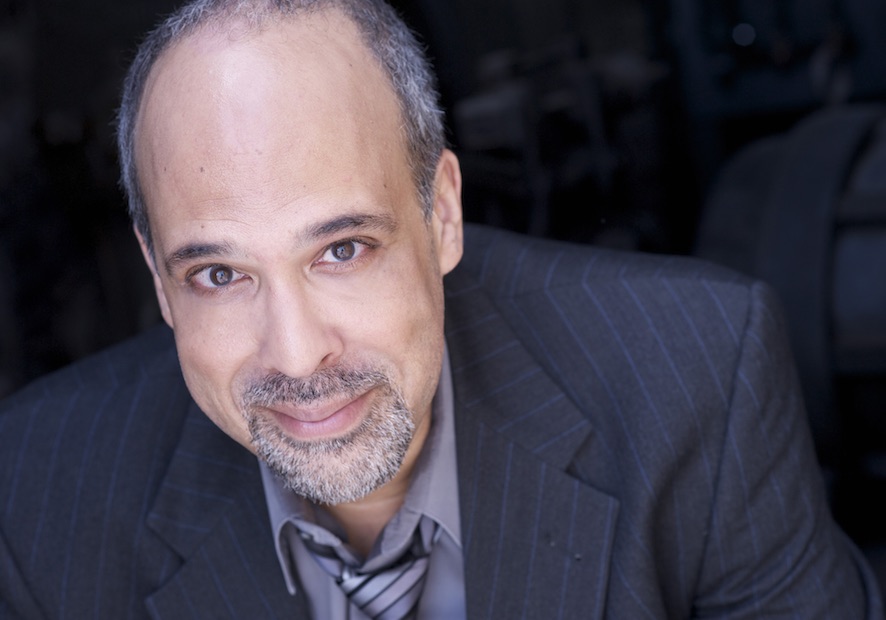
TimeLine Artistic Director PJ Powers (PJP) interviews actor Donald Brearley (DB),
who makes his TimeLine debut in the pivotal role of Hector in The History Boys.
(PJP) Throughout your impressive career you’ve worked with a wide range of theater companies around Chicago. How did you first break in to the Chicago theater scene and what’s kept you here?
(DB) I graduated mid-year in 1976 and along with other University of Illinois graduates remounted a production of Michael Weller’s Moonchildren. It was produced by cast members Stuart Oken and Jason Brett and their company Apollo Productions, which eventually built the Apollo Theatre. It was directed here, as in Urbana, by
Robert Falls.
Two years later, having gotten my union card, the growth of my resume slowed. By the time it had filled out, New York was a tougher move to make. My best opportunities were here with the Body Politic Theatre and so here’s where I stayed.
(PJP) Tell me your first impression of The History Boys.

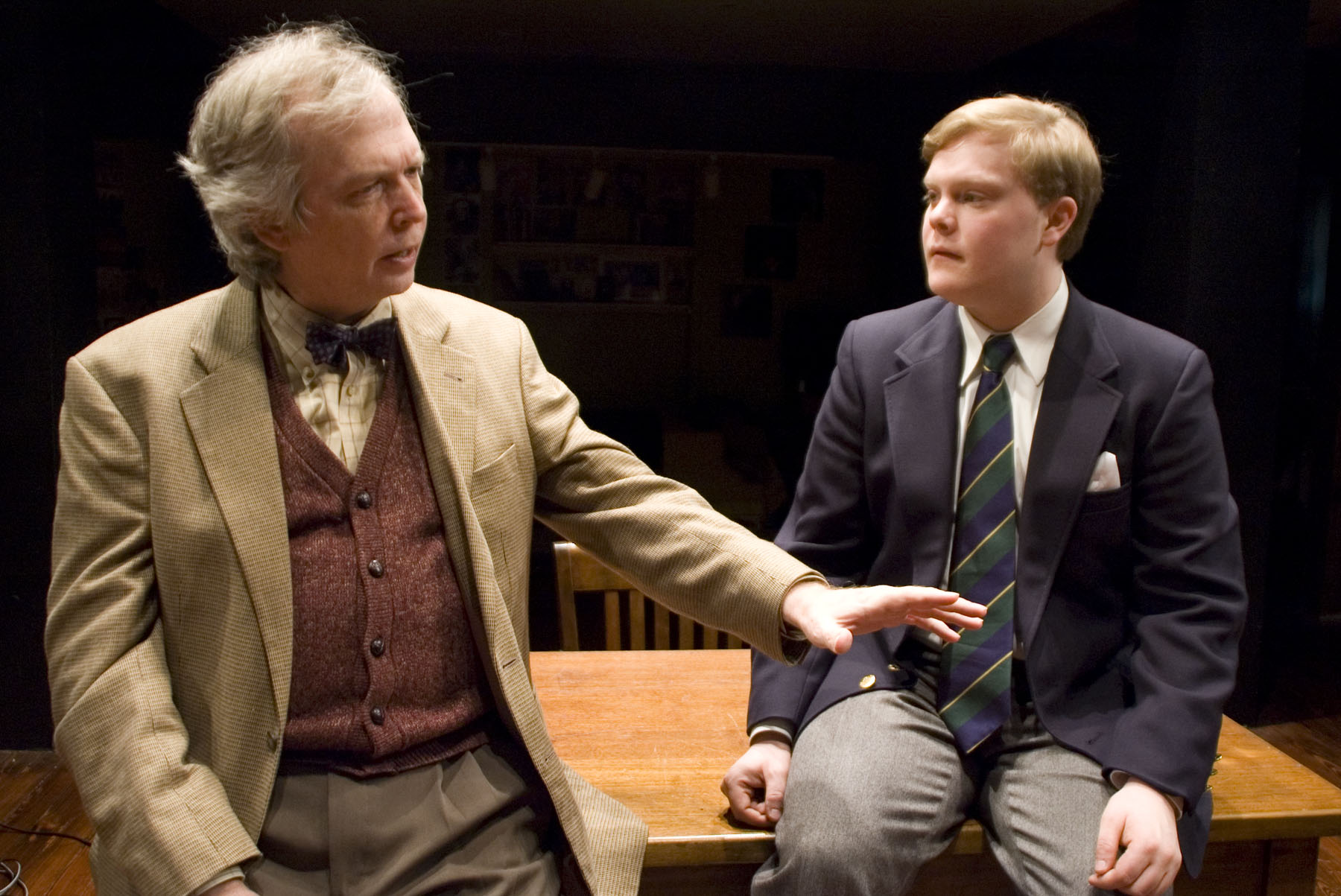
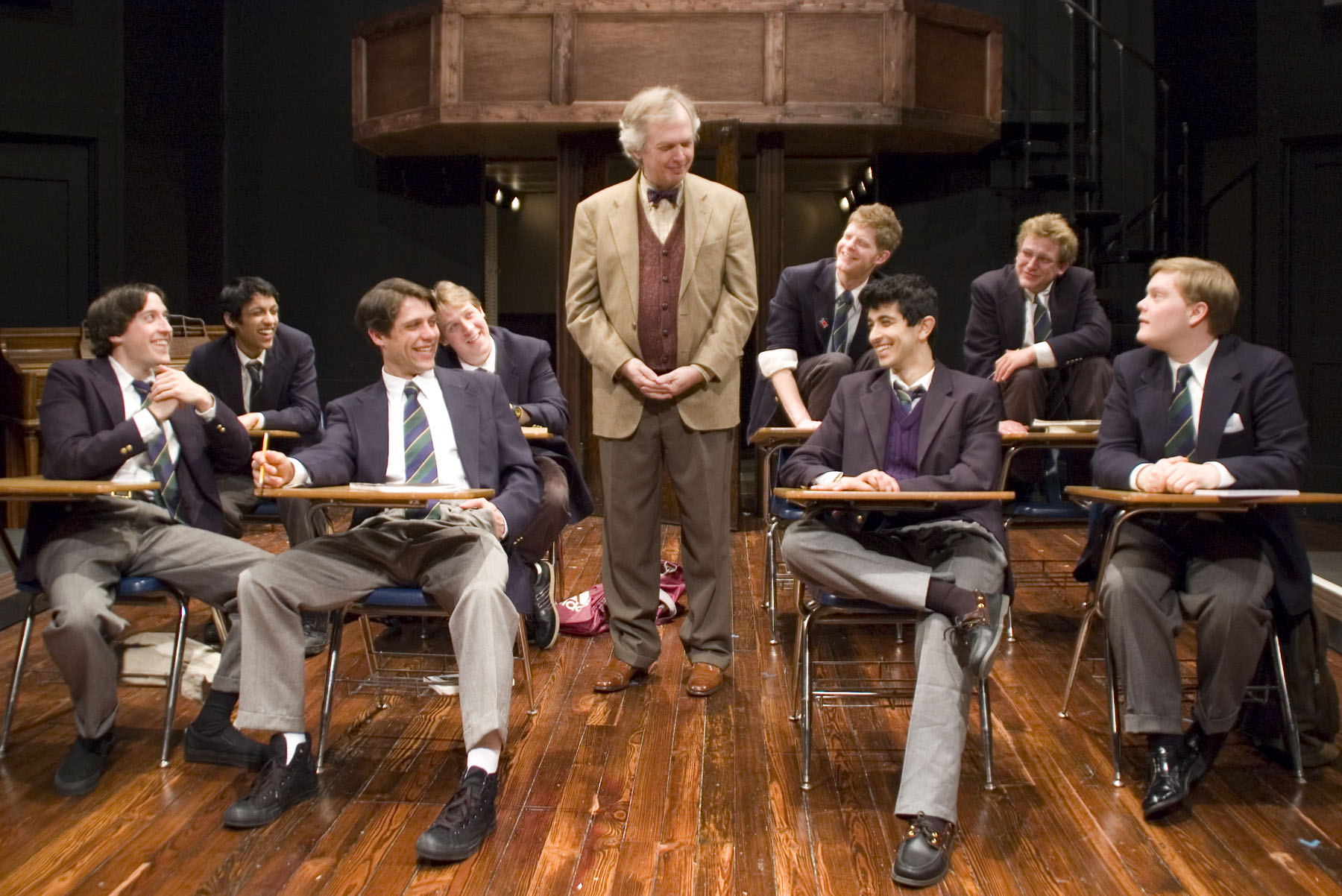
Donald Brearley makes a memorable first entrance as Hector in The History Boys. |
|
(DB) I was working at Writers’ Theatre with Remy Bumppo artistic associate Nick Sandys, and he was touting its literacy and theatricality. I’d been a huge fan of playwright Alan Bennett’s Kafka’s Dick and was struck by one of the common themes: bonds between individuals across time forged through the medium of culture.
(PJP) Looking back on your high school days, do you identify with any of the students in the play?
(DB) That’s not so easy (it’s a way back, you know), but probably Scripps. Because, in spite of my desire to perform, I took myself and the world fairly seriously. These students, by and large, are much more confident personally and precocious intellectually than I was.
(PJP) In all of TimeLine’s 12 seasons and 38 productions, I can’t think of any role that people have inquired about more than Hector. I’ve had countless inquiries about who is playing the part. How does it feel to step into a role that carries so much attention?
(DB) Fine, until asked the question! The underlying question seems to be: What makes you think you can play the role? I think if you and director Nick Bowling had been looking for Richard Griffiths (who originated the role and earned a Tony Award), I would feel much more pressure.
I’ve gotten reasonably accustomed to my own envy of other actors and appreciate that it exists in others, too. I know, too, that TimeLine has a lot of expectations for this production, but they are being borne by the whole team. And I’m sure Mr. Griffiths was more impressed by the opportunity to enjoy participating as Hector in the play than by worry that Mr. Bennett’s creation needed more talent than he could supply.
(PJP) There’s been an outpouring of affection for Hector. People gush about loving the character, yet he does many things that are not admirable. What’s your response to that?
(DB) Well, perhaps it’s a response to both Hector’s love for his students and his need for love himself. Also, wit goes a long way; look at Richard III, for heaven’s sake! At least Hector doesn’t try to make the audience accomplices. I, myself, question Bennett’s intention here. He does fairly blast Hector’s self-justifications through Mrs. Lintott, but puts the sternest condemnation in the mouth of the Headmaster, a character whose credibility Bennett undercuts at every opportunity.
(PJP) You actually have a resume that seems like it was created from Hector’s bookshelf—Shaw, Shakespeare, Stoppard. How did your work on those plays prep you to step into Hector’s literary mind?
(DB) It might be well to say the “literary heart” of Hector, too. Those writers, first of all, create characters who are poets themselves, in that they are grappling with personal experiences or views of life and the world, and they need to express their struggles in words. Many playwrights do this, and the ones who stay with us are the ones whose characters express themselves “memorably.”
| |

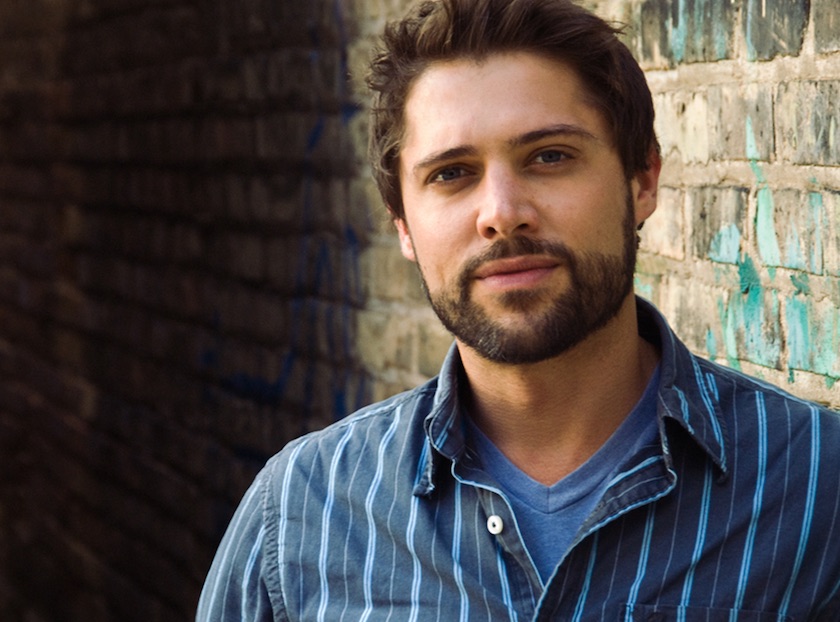
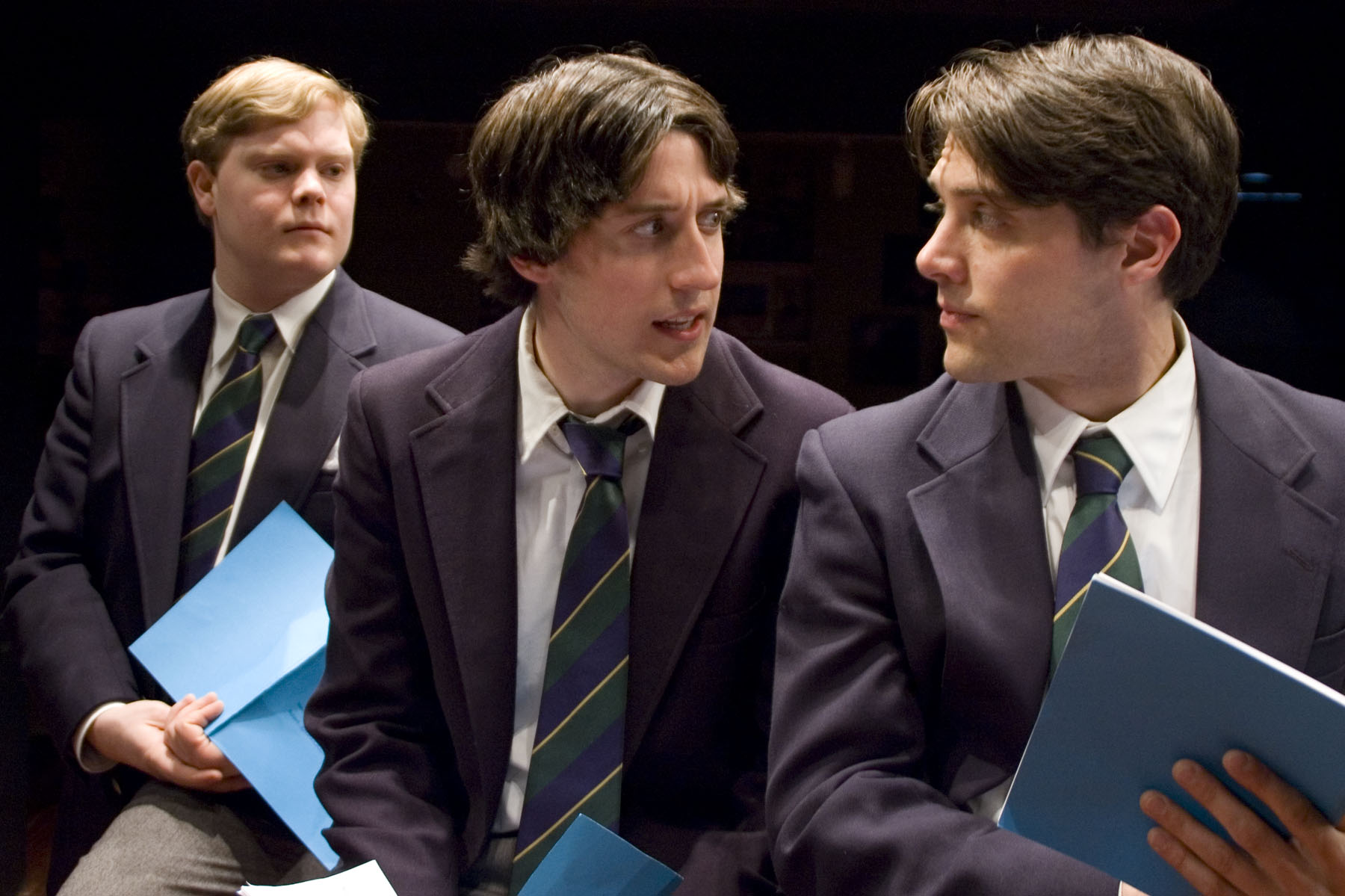
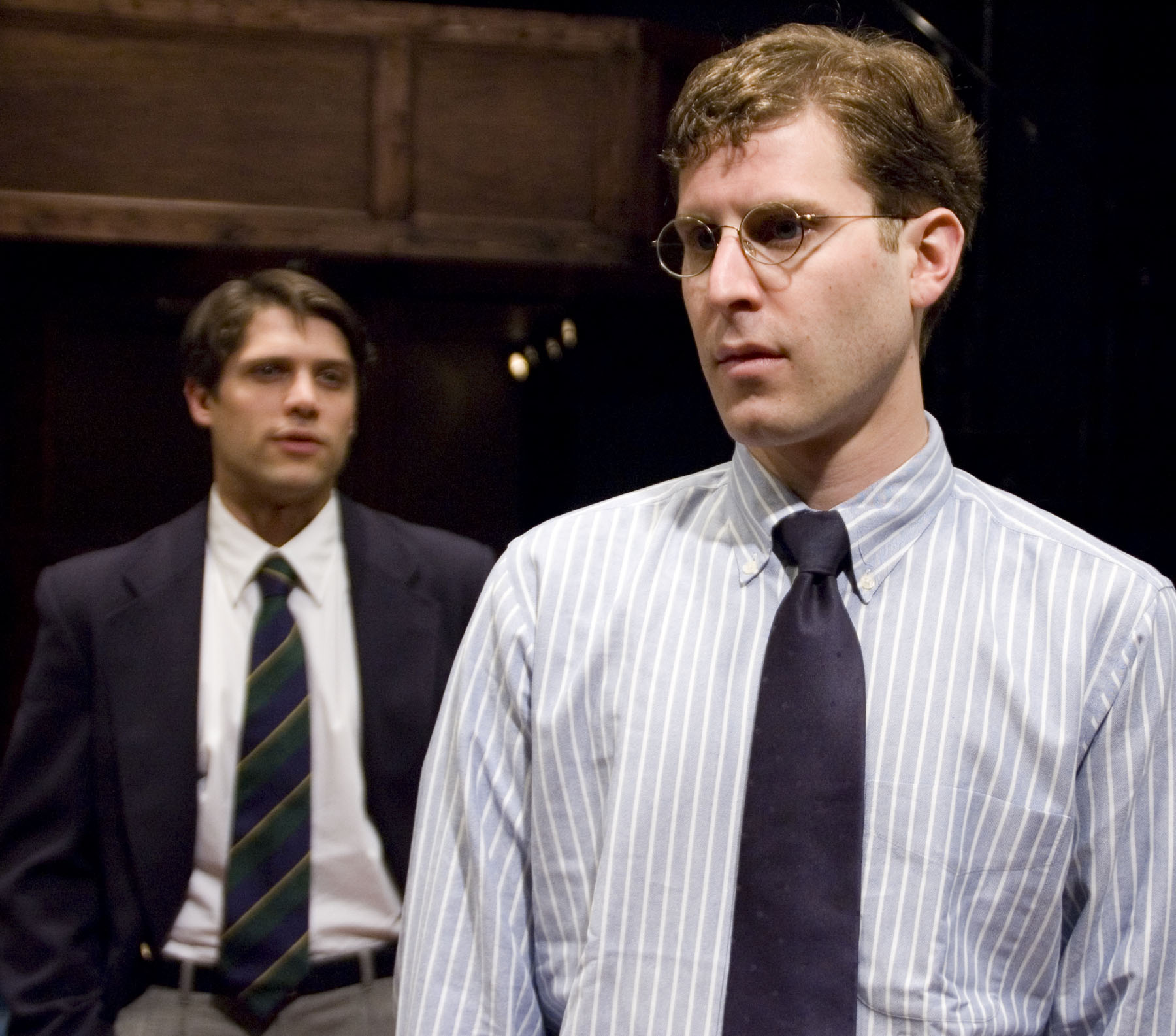
Donald Brearley as Hector (left) and Alex Weisman as Posner in The History Boys. |
But another aspect of these characters is as passionate defenders of truth, whether they are fighting to keep it hidden, as Claudius is in Hamlet, or slavishly serving the idol of his own suffering, as is Donner in Stoppard’s Artist Descending a Staircase. And all of these characters express their struggles aware of the sufferings of others. They acknowledge a “literature” they have tried to learn from, whether it’s Claudius communing with the grief of his new subjects or being unable to make the church doctrines of redemption effective in his situation, or Richard II’s identification with beggars “bearing their own misfortunes on the backs of such as have before endured the like.”
I think this identification with the sufferings of his literary saints is not only a key to Hector’s character, but also his view of the purpose of literature, and probably also for me, the purpose of drama.
There’s a second way these writers have been important for me. The agility and strength of mind required, first to understand what their characters mean, and then to trace that meaning back to the soul’s desire to express it, has challenged every actor who gets to work on them. And the study required of the usage of words and the necessity of understanding historical context—to then understand the character’s response to his condition—is exactly what Hector seeks to impart and is the closest I’ve come to obtaining a literary education.
Finally there is the benefit of “basking in reflected glory.” Hector’s own attachment to the writers he teaches is like the satisfaction an actor gets from playing a good role. Both get to experience the pride and pleasure of impersonating the originator of these enduring expressions of the soul.
|