TimeLine Theatre Company  
Current SeasonTicketsDirectionsDonate
HomeThe CompanyProduction HistoryWork with UsContact Us
Production History
Current Season


"That moment when you first step out on
stage ...  that space, that air — it's magical"
— An interview with David Parkes
     back to Harmless

TimeLine's world premiere production of Brett Neveu's Harmless features a remarkable cast of three actors who walk the tightrope of Neveu's script with commitment and skill. TimeLine company member and marketing director Lara Goetsch (LG) interviewed all three of them so you could hear more about their background and what it's been like to tackle Harmless on stage.

David Parkes (DP), a TimeLine Company member since 2002, portrays Jim McFehren. Starting with his performance as the scheming Mr. Manningham in Gaslight in 1999, David has made always memorable and in many cases indelible appearances in 11 TimeLine productions, including as Warden Whalen in the Midwest premiere of Tennessee Williams’ Not About Nightingales, for which he received a Joseph Jefferson Citation. Read his complete biography here.

  David Parkes
 

Harmless

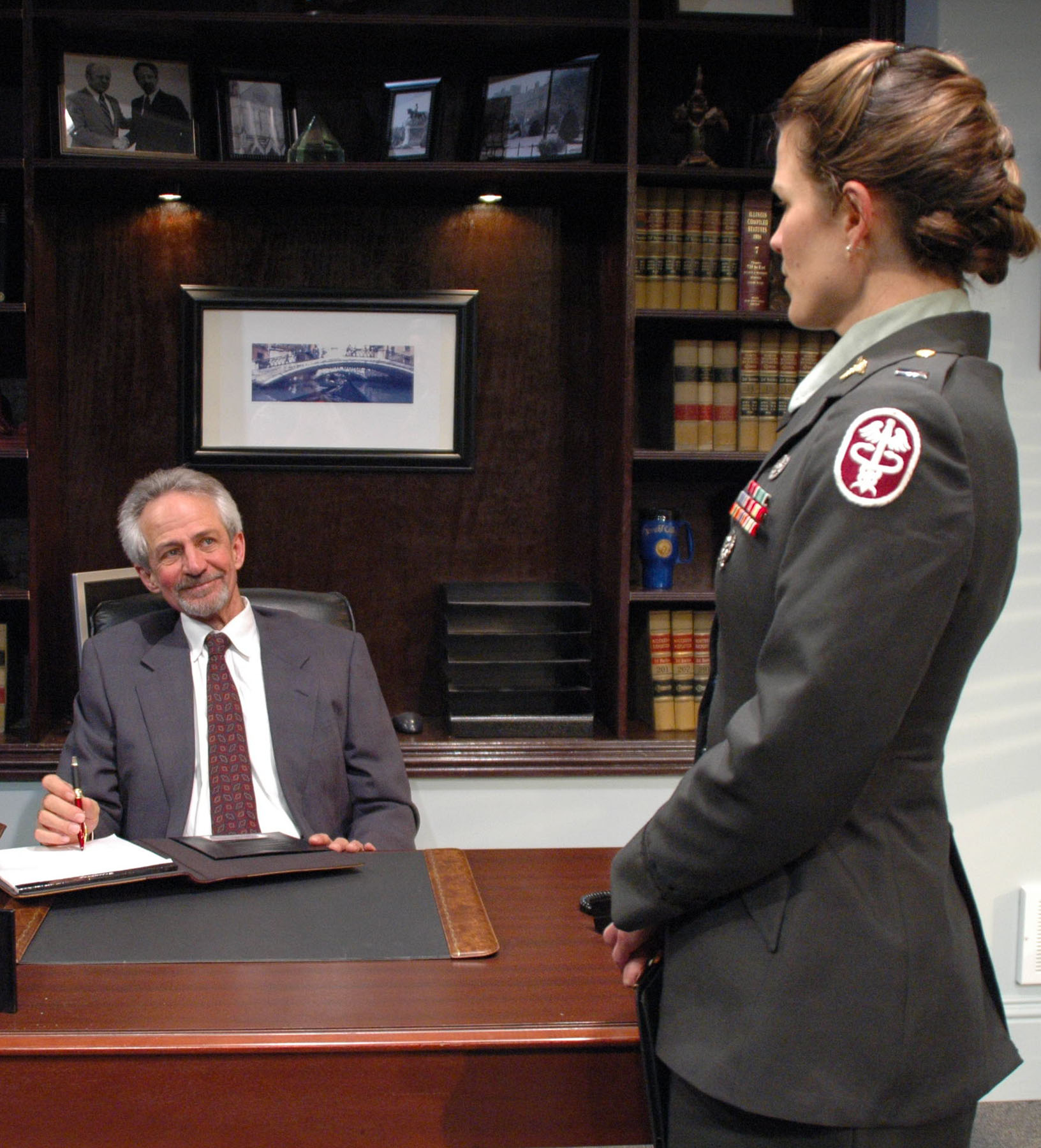
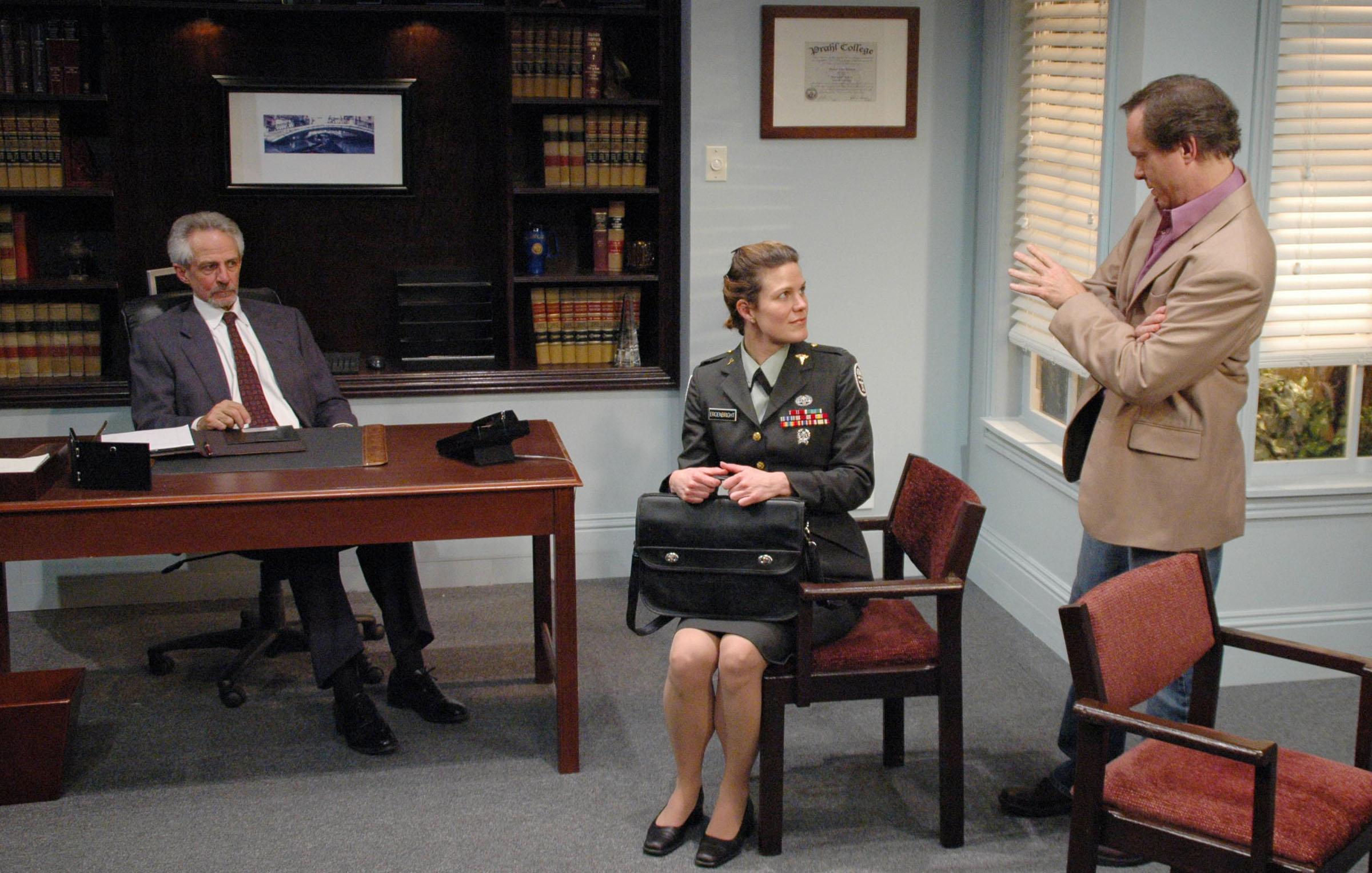
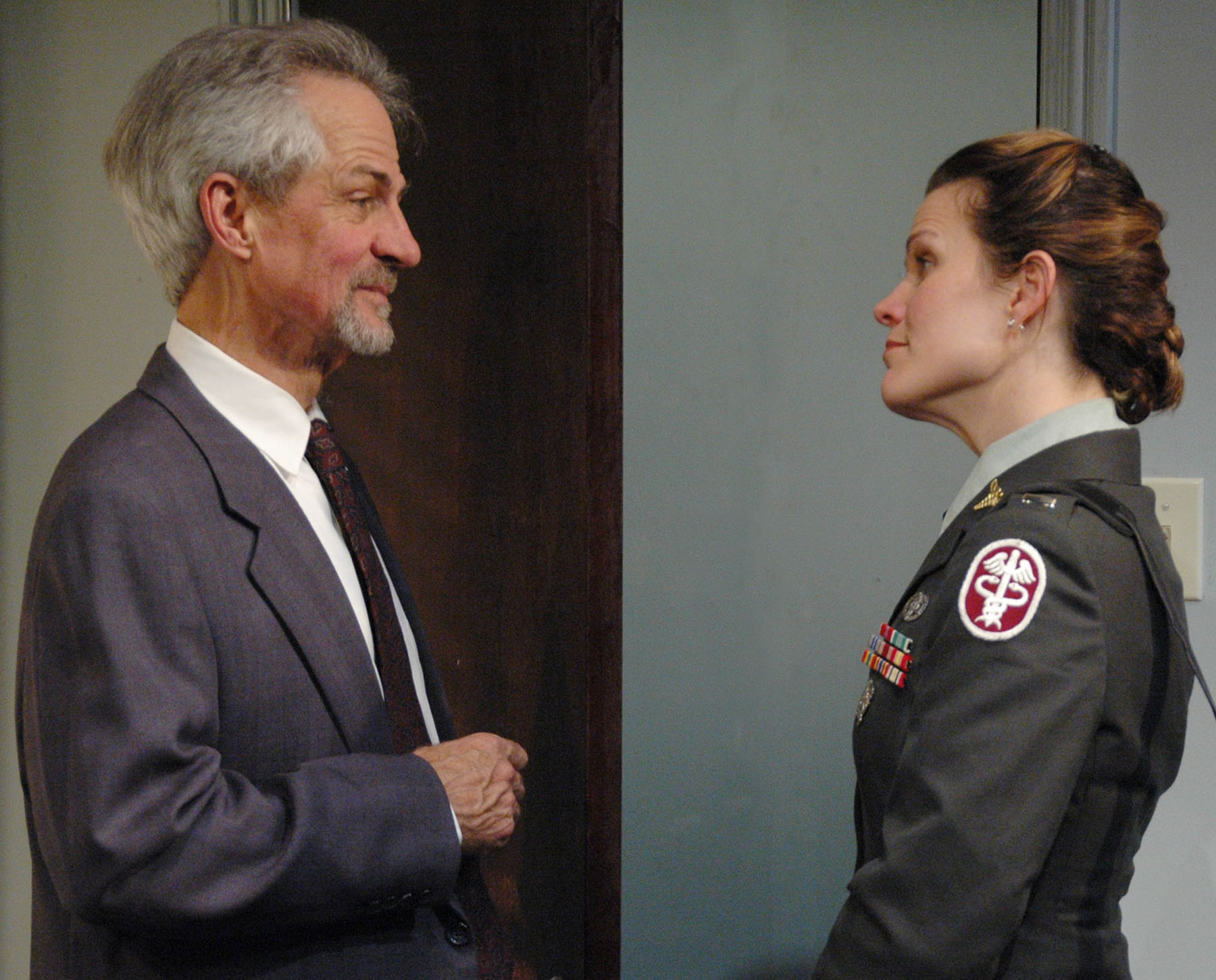
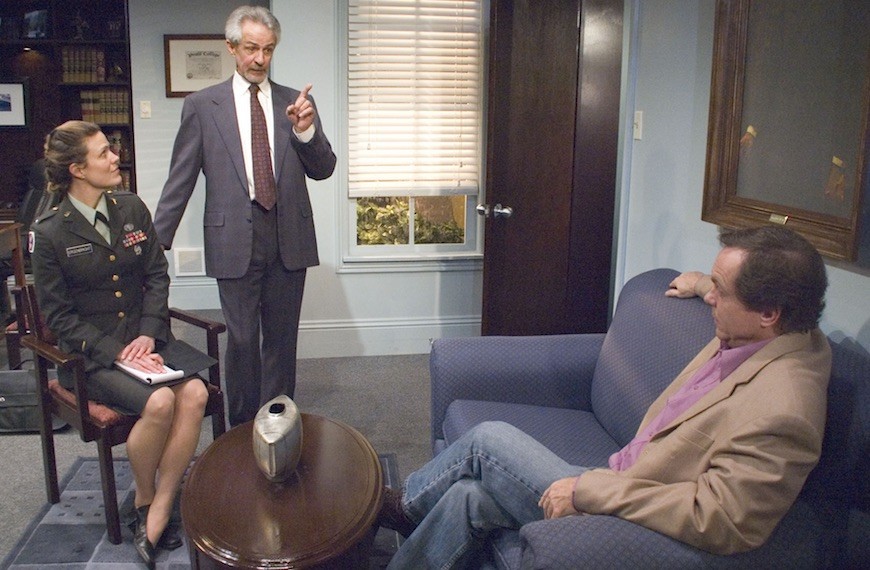
David Parkes (above) and with Juliet Hart (below, left) in Harmless.


(LG) OK, I’ve known you for more than eight years, and yet I just discovered that you were a child star? I also know you worked in Florida, New York, and elsewhere before settling in Chicago. Please fill us in on what brought you to acting, highlights of your career, and ultimately, how you ended up in Chicago?

(DP) I did a lot of work as an actor when I was a kid — from about age 12 on — initially on stage, community theater and that type of thing. I was taking a class from a private acting teacher and I got invited to do a pilot for a TV series — a kids’ news program called Kidsworld. The premise was that there were kid reporters and kid anchor people telling news stories. For the pilot I was a reporter, but when they actually created the series, they asked me to be one of the anchors. It was picked up by NBC owned-and-operated stations, and many of the affiliates, around the country and ran for two seasons. The show started with a stopwatch, like 60 Minutes, and then we would introduce these stories.

I also reported on a couple of stories of my own. I actually did one from the Goodyear blimp — I got in the pilot’s seat and flew the thing. Another story revolved around a production I was doing of Oliver at the Cincinnati Playhouse in the Park. Many of the other kids in the show went to a local performing arts high school, so we did a segment for Kidsworld about that school.

I actually traveled quite a bit during that time. I did some work in North Carolina, Pennsylvania, auditioned for a couple of movies in New York, summer stock, that kind of thing.

After I finished high school, I went to NYU for my undergraduate degree and then did the starving actor thing in New York for another seven years — sleeping on other people’s floors, being thrown out of sublets of other people’s sublets and bouncing around from place to place. Then I was hired for a season of work at a community college in Daytona Beach, Florida, and got a series of jobs there. I’d been thinking of going to graduate school and ended up at the Asolo Conservatory, which is connected with Florida State University in Sarasota. It was a two-year graduate program, and while I was there the school brought agents from New York, Chicago and Los Angeles to see the work that we were doing.

Harisse Davidson, an agent from Chicago at the time, said that she would sign me on with her agency if I moved up here. At the time the idea of Chicago was a lot more attractive than going back to New York, because I just wanted to work. I felt I’d have a much greater chance to work steadily in theater in Chicago than I would in LA or New York. I’m still convinced that was the right choice.

Gaslight

David Parkes' first role at TimeLine
was as Mr. Manningham in Gaslight,
the first production presented in TimeLine's current performance
space. He has since appeared in
11 TimeLine productions.


(LG) You first worked with TimeLine in the fall of 1999, appearing in the first production we did in our current space, Gaslight. And you’ve stuck around ever since. After such varied experiences in your career, why did this place feel like home?

(DP) I remember well getting the first packet of information about the production of Gaslight, right after I was cast. Just the way that packet had been put together — the information about the play, about the production, and so forth — I knew immediately that this was a company that really had its act together and valued organization and respect for visiting artists. And then once we started working, those feelings just became reaffirmed through the rehearsals and on through the performances of Gaslight. Clearly this was a dedicated company of people who were excited about what they had to say and how they wanted to say it.

(LG) You became a TimeLine company member after appearing in Awake and Sing! What does that involvement mean to you, and what are your aspirations for the company?

(DP) I saw in some article/interview with an actress recently who had just gotten married, she said that her husband “gives me the net that allows me to be the person I truly am.” And I believe that the commitment and the values and the organization of TimeLine has accomplished that same thing for me as an actor — has given me the net that allows me to flesh out who I can be as an actor. And because the company is so successful at creating that environment, it attracts a lot of really wonderful actors with which to share that experience. And then it just begins to feed on itself in a wonderfully productive way.

I guess my aspirations for the company would be that with the inevitable growth in resources, we also maintain a keen eye on what got us here, which to me is that incredible environment of support for all the right reasons.

(LG) This is your third experience appearing in a Brett Neveu play, having appeared in American Dead and Heritage at American Theater Company, and now Harmless. What is your view of Brett as a playwright, and what do you find similar or different about these three plays?

(DP) The thing about Brett’s writing is that he has an incredible knack of capturing how people really speak. Half sentences. Pieces of an idea, unformed or in the process of being formed. Reactive responses to situations and ideas that feel very much like life to me. And that’s what I find so exciting about performing his work. He’s tapping into what feels to me are very natural rhythms of communicating, and those rhythms often inform a character’s inner life and point of view, and tell us a lot about who that character is.

Also, a great deal of what Brett writes about questions our ability to connect with each other. I think he is particularly sensitive to people as social animals, and is acutely aware of how existing circumstances are causing us to become more isolated from each other. So his plays are often about isolation.

And an aspect of Brett’s writing that is so important for the theater at large is his intention to focus on questions more than answers. Brett is far more interested in eliciting real questions from his audiences, than he is in convincing them of his point of view.

(LG) Do you think that can be frustrating for audiences?

(DP) For some people, yes, it can be frustrating. But one hopes that the theater does more than just entertain its audiences. One hopes the theater provokes and challenges its audiences to think out of their comfort zones and areas of predictability. I think Brett has found a way to do that with his stories that feels much more covert because rather than hitting you over the head with dogma, he draws you in with these seemingly mundane characters and circumstances and entices you to question the deeper meanings behind their actions. He’s really a very unique writer in that way.

(LG) What do the rhythms of Jim McFehren tell you about him?

(DP) Well, the ways in which the rhythms inform me in Harmless have to do with when the character is on point as opposed to when he is unsure of his tactics or the ground on which he stands. This is a person/character who values his intelligence and his artistic perspective, so when he is on message, he relishes these verbal skills and his ability to persuade. And when he is off balance, because he’s been challenged or is being persecuted in some fashion, then those rhythms begin to change and betray that confidence.

(LG) Why do you think Ed Sobel is such a great director for Brett’s work? What is it like working with him as a director?

(DP) This is the fourth time that I’ve worked with Ed. He is an incredibly sensitive man who’s spent a lot of time working with actors and playwrights and is keenly aware of how to negotiate those differences in perspective. He has certainly gotten to know my work very well under a lot of different circumstances and we’ve managed to develop a shorthand between each other that’s exciting.

Ed is very good at tracking a story, I think because of his experience developing work with playwrights. He has a keen sense of how one moment facilitates the need for the next moment which facilitates the need for the next moment, and so on. Cause and effect. And so as an actor, it allows you to focus on good storytelling and get the focus off of yourself.

(LG) This cast – the three of you are really out there tackling it together, working together very closely to bring the script to life. What’s it feel like out there?

(DP) We often spoke in rehearsals about this piece in terms of its musicality — the ways in which these individual voices, through the rhythms of Brett’s writing, begin to come together as a singular sound. Much like a finely tuned jazz trio, when you begin to focus on the cumulative sound of the three instruments rather than just the individual players, the overall message of the piece begins to really come through. There’s much in Harmless that feels like that, I think … I hope.

(LG) So much of our audience has talked about the chemistry the three of you have. How do you create that?

(DP) When you have two other people who work as hard on the material as John and Juliet do, and are truly excited about being involved with the piece and what it has to say, then you just want to be in the room together to tell this thing. The great thing about coming to the theater every night is that we all so fervently want to be on stage wrestling with this story again. And what’s been exciting over the course of the run has been the discovery of how these relationships and our understanding of these characters deepens through the continual play that exists within the production. When we’re all leaning forward into the piece like that then all kinds of discoveries can happen, and I think an audience can feel that energy.

  Hannah and Martin

Awake and Sing!

David as Martin Heidegger with
Elizabeth Rich as Hannah Arendt in Hannah and Martin (above) and as
Moe Axelrod with Beth Lacke as Hennie in Awake and Sing! (below). Both productions were honored with Jeff Citations for Outstanding Production.

(LG) You’ve played a wide range of characters at TimeLine — from that first performance in Gaslight, to Warden Whalen in Not About Nightingales, to Martin Heidegger in Hannah and Martin, Moe Axelrod in Awake and Sing!, Thomas More in A Man for All Seasons — and just this season, George Washington in The General from America, Harmless, and soon to be Sartorius in Widowers’ Houses. TimeLine audiences have come to know and love you as an extraordinary actor through this diverse body of work. How do you describe the roles you have played?

(DP) Well, here’s the way I would describe it: lately when I’ve thought about the roles I’ve played at TimeLine, I’ve grouped them under the moniker “superior guy.” Which is to say, characters who come from strong power positions and tend to be convinced that they’re the smartest people in the room. They believe strongly in their abilities to persuade, and they are usually pretty intelligent characters who are accustomed to getting their way. If you look back, almost all the roles I’ve played here are like that. Even before TimeLine, there were all these roles as kings. It’s ridiculous how many kings I’ve played. It’s absurd! I couldn’t come from a more ordinary, suburban, middle-class background.

While I’ve certainly enjoyed playing those types of characters, what’s been fun about the other pieces I’ve done with Ed and Brett, and Harmless is a little like this, is that those characters have been underdogs. And I actually really love playing underdogs. For whatever reason – it just hasn’t been something that comes up a lot.

(LG) Can you talk about how you approach each character to make them each so unique and surprising?

(DP) Well, it starts with sex. Really, it's all about the sex … And I’m only mildly kidding about that. It has to start with a sense of how this character excites you in a visceral way. How you can live through this character in a way that drives you to make choices that are exciting to play. When you combine the unique given circumstances of place and time and character and relationship with this sense of play, then you start to open yourself up to possibilities you may not have thought of on an intellectual level. You surprise yourself. And when you then combine those discoveries with what a director has in mind for telling the story, then new visions of this character can really begin to take shape.

I love to think of that moment when you first step out on stage — that space — that air, its corny to say it perhaps, but its magical in that it has, on an elemental level, permission. And potential. And within that space, great surprise is possible. When you can allow yourself to truly listen and be open to that, than real discovery and spontaneity can happen.

What’s also important for me to remind myself of is that the work that I do on stage is a true synthesis of what happens in my life - which may seem obvious, I guess - but its important for me to not put my life aside in the times that I need to be on stage. If I’ve had a lousy day, then I’ve got to find some way of making those feelings appropriate to the play. Every time you deny those feelings, you deny a part of yourself that takes you further away from your character, so you really need to bring a deeper sense of self to what you bring to the character involved in that story. You, in fact, discover yourself through the character – who you are and who you can be – the facets of you that don’t readily get expressed or recognized.

(LG) What’s next for you? What kind of challenges are you looking for next as an actor?

(DP) Well, I wouldn’t be an actor if I didn’t say that what I would really like to do someday is direct …

But it has been suggested on occasion and is, in fact, something I would like to try. Both of these tasks are about committing to strong choices — specific choices designed to bring forth a playwright’s vision in a way that rings true to an audience and says “wake up and pay attention, folks … you’re going to want to hear this.” I try to bring a directness and honesty to my choices as an actor to convey that idea, and I hope that I can find a way to translate that process into directing, as well. Someday …

Thank you for reading! You may also want to check out our interviews with David's castmates Juliet Hart and John Jenkins.