TimeLine Theatre Company  Jeff Recommended!
Current SeasonTicketsDirectionsDonate
HomeThe CompanyProduction HistoryWork with UsContact Us
Production History
Current Season


Hannah and Martin
  back to Hannah and Martin home

Review of Hannah and Martin

reviewed by Joe Stead
steadstyle.com
5/13/03


Critical Evaluation: * * * * out of * * * *

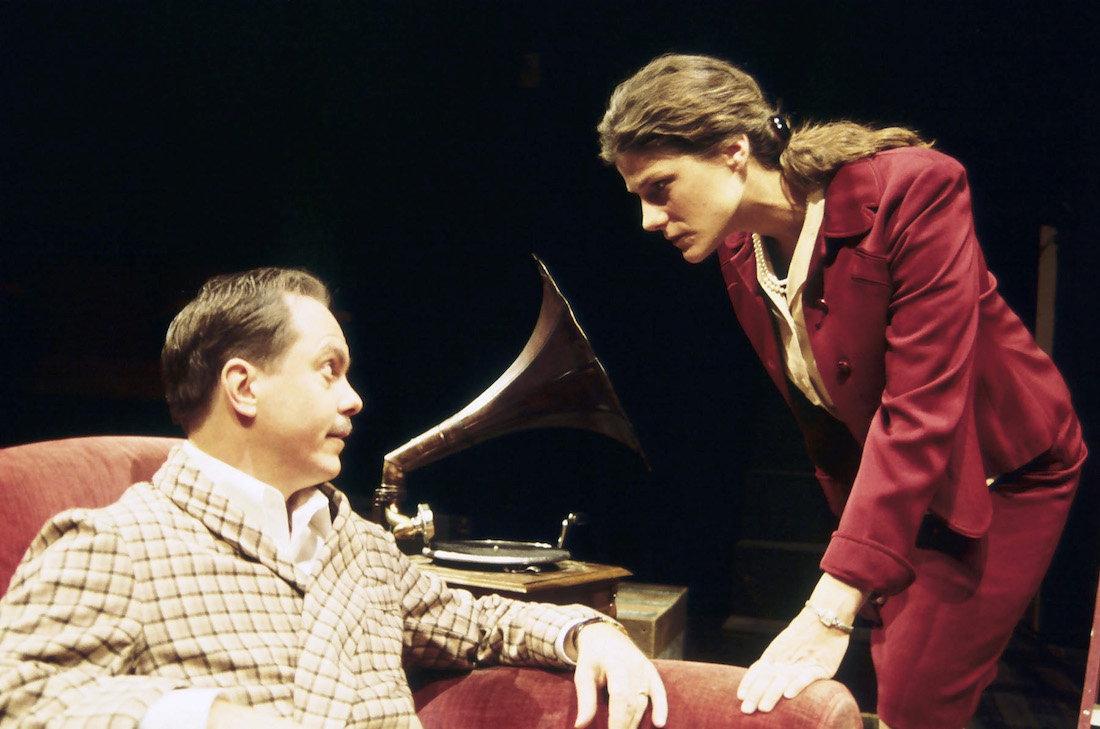
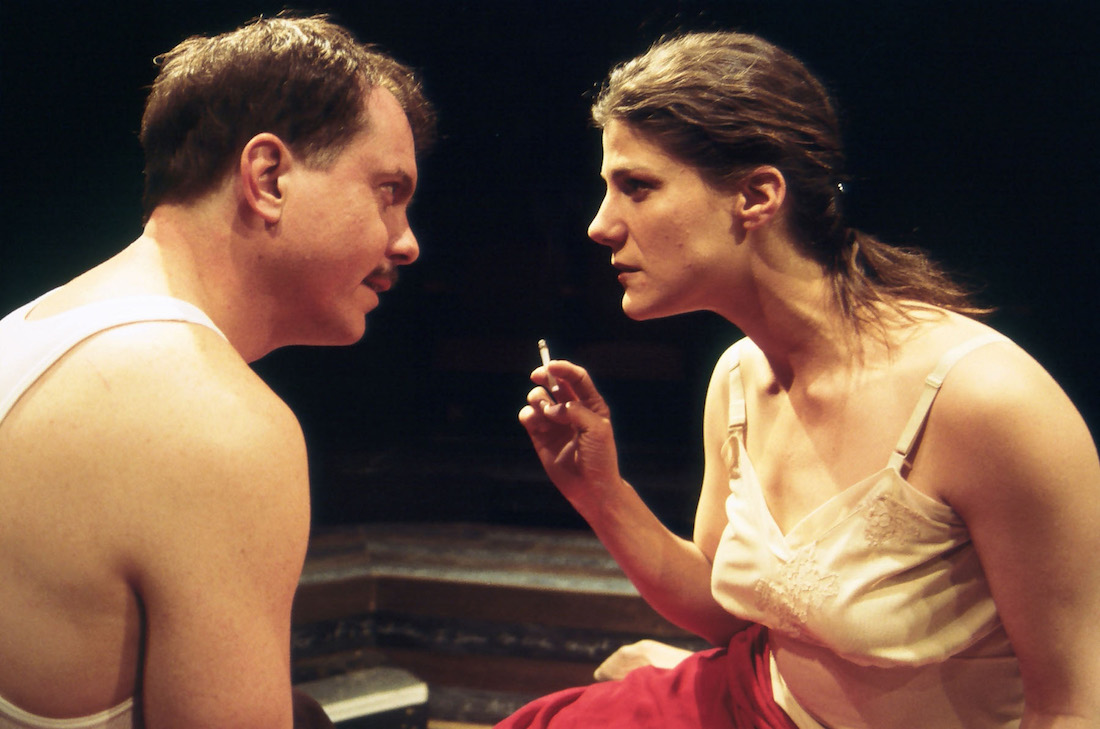
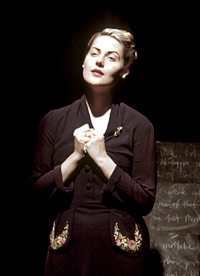
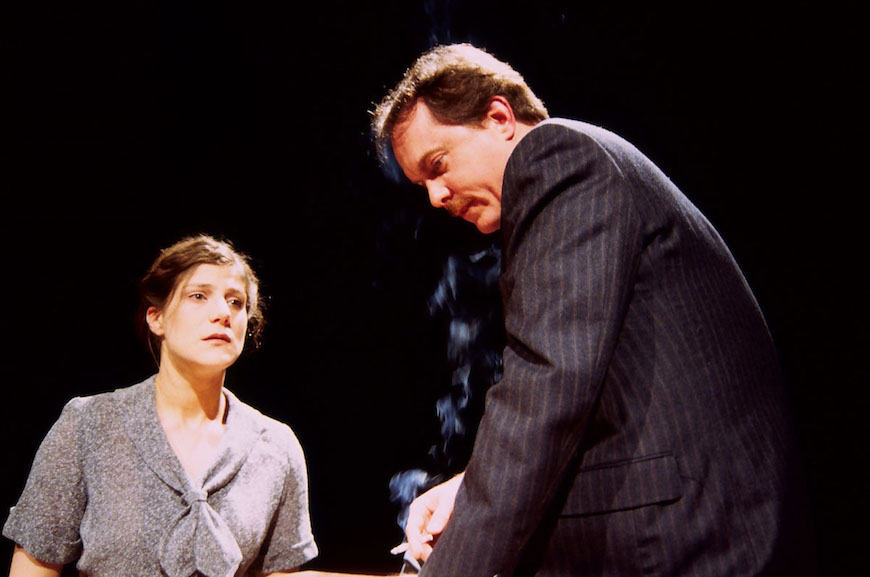
Hannah Arendt (Elizabeth Rich) and Martin Heidegger (David Parkes) in the world premiere of Kate Fodor's "Hannah and Martin". Photos by Lara Goetsch.

"It was a war. There were casualties. This was one of them, I suppose." Chilling words that could easily be uttered in 2003, but which serve as more than a historical footnote in TimeLine Theatre Company’s current world premiere, "Hannah and Martin." The title characters of first-time playwright Kate Fodor’s searing original drama are two philosophers, Hannah Arendt and Martin Heidegger. "Hannah and Martin" is based on real people and events, somewhat fictionalized for stage purposes, but a fascinating and compelling study of two vastly different but equally passionate and brilliant thinkers.

"I’m Jewish, not German," a chain-smoking Hannah Arendt states. She tried to be both but realized that to be an impossibility. On assignment for The New Yorker magazine to cover the notorious Nazi war crimes trial by the Nuremberg tribunal, Arendt has a sense of both regard and animosity for several of the 23 Nazis on trial. Baldur Von Schirach was personally appointed by Adolph Hitler to head the Hitlerjugend, a youth coalition that introduced music and the arts to children who would eventually be inducted into S.S. service. Von Schirach’s goal, he claimed, was to instill in children a love of music and country, and he avowed no personal knowledge of Hitler’s plot to exterminate the Jewish population. He would ultimately be found guilty of war crimes and sentenced to 20 years in prison.

Arendt’s lover and mentor, the great German philosopher Martin Heidegger likewise came under personal attack in what Hannah describes as "a spell of political insanity" when he signed the Nazi pledge. Martin is a genius who welcomes his young protegee’s free-thinking manner. "Learning is easy," he tells her, "thinking is something else." Martin promises Hannah that "I will teach you and you will rescue me."

Hannah’s loyalty to her lover and teacher is indelibly shaken by Martin’s embracing of the Nazi party. "You taught me what to love and you turned into this," Hannah exclaims in horror as Martin attempts to defend his beliefs. Hannah questions whether to implicate or come to the defense of one of the greatest philosophers and thinkers the world has ever known.

Fodor’s thought-provoking play asks to what degree can people be held personally accountable for actions that may or may not have been within their power to control. In spite of their reign of terror, Martin holds fast to the Nazi ideals of a powerful Germany. "I allowed myself to be used for purposes that were not my own, but should I be persecuted for them?" he asks. Hannah argues that it was clear what Hitler was from the beginning. And as Martin points out, "questions are to be asked, not necessarily answered."

Fodor’s taut drama doesn’t idealize or make excuses for her subjects, which makes them not only dramatically interesting, but fundamentally human. In TimeLine’s excellent staging, Elizabeth Rich and David Parkes give fiery fuel to these rich and complex characters. And while the leading actors dominate the play, there are some fine and subtle performances by Danica Ivancevic as Martin’s wife; Scott Mullins as Von Schirach; and Linsey Page Morton as Hannah’s strong-willed American secretary. Director Jeremy B. Cohen’s intimate promenade production is a rewarding follow-up to Shattered Globe’s dynamite "Judgment at Nuremberg." Six decades later, the questions these plays raise are still vital and timely.