The General from America
The General from America home
An Interview with
Actor Terry Hamilton
Two weeks into rehearsals for The General from America, TimeLine's
Artistic Director PJ Powers (PP) chatted with Terry Hamilton (TH)
about his work on TimeLine's stage during the last two seasons and his
current portrayal of America's most notorious traitor, Benedict Arnold.
(PP) Terry, it's a little
hard to believe that your first TimeLine show was less
than two years ago. Yet in that time you've become one
of the most recognizable faces on our stage - you've
appeared in This Happy Breed, Pravda, Martin Furey's
Shot, Copenhagen and Fiorello! What is
it that has drawn you so often to TimeLine's work?
(TH) Well, to be honest, I auditioned for and was cast in This Happy Breed before I ever saw a production at TimeLine. I was recovering from some personal trauma around that time, and all I wanted to do was immerse myself in work. I loved the script and wanted to keep myself busy. Once I was cast, I thought I'd better check you out. You were running the remount of Hannah and Martin, so that was the first thing I saw. About 10 minutes into it I realized I was watching something very special. The performances were wonderful—the production values, the energy—and I was impressed with how much you did with so little. It was a very exciting experience for me. I also felt that to produce theater of that quality there had to be something special going on behind the scenes as well.
I left the theater elated, and then panic set in. "I'm
not that good," I thought. But everyone was so
supportive and the atmosphere you create at TimeLine
is so conducive to helping artists, designers and everyone
involved in the production do their very best, it just
felt like I belonged here.
(PP) From the list of shows you've done, do you have a favorite?
(TH) Every show has its challenges, and there is always something I like about every production I'm involved in. The challenges of Copenhagen seemed enormous, and I'm very proud of what we did with that production. And I had great fun with the role of Eaton Sylvester in Pravda. But I have a special place in my heart for This Happy Breed. Frank Gibbons was a marvelous role; the cast was just right, Nick Bowling, the director, did a fabulous job —it just seemed everything fell into place. Plus, it was the first show I did at TimeLine. I could have run that show for years.
(PP) Prior to working in Chicago you spent some time in New York, and some of our audience may not know about your stint working on a Broadway stage many years ago. This, of course, is one of my favorite anecdotes about you. Please share some information about what you appeared in on Broadway—and tell us a little bit about your costume.
(TH) Right. And thanks a lot, PJ, for bringing this
up. I did Oh! Calcutta on Broadway for nine
months, and the costume you're referring to is my original
birthday suit. I lived in New York for 11 years, studying
and trying to make a living as an actor. Producers of
regional, summer stock and dinner theaters come to New
York from all over the country to cast. So I'd get a
job, leave New York, do the gig and then come back and
live on unemployment until the next job came around.
I really wanted to try and stay in the city for a long
enough time to see if I could start working there. I
went to the audition for Oh! Calcutta thinking I wouldn't
have the slightest chance of getting it. The whole audition
process took about a week. They would have a bunch of
us come in and we'd cold read scenes, then they had
us sing. And then there were the dance and movement
auditions. As the week went on I kept noticing people
peeling off, and I kept getting called back. Finally
it was down to five of us, and I thought, "Oh, my God,
I could actually get this." The last day was the
day they separated the "men from the boys," so
to speak, and one by one we were led into the theater.
My turn came. I walked on to the stage. A voice came
out of the dark. "Mr. Hamilton, please walk off stage
to your left. You will see a robe hanging up. Please
take off all your clothes, put the robe on, walk to
center stage. Music will begin. Drop the robe, and we
want to see you move." I didn't have the faintest
idea what I was going to do. The music started. I dropped
the robe and began moving like my life depended on it.
To this day I can't remember exactly what I did, but
it must have been a hell of a show because I got the
job.
Now wait a minute—as I recall, you were naked yourself, PJ, in TimeLine's very first production. Perhaps that's why we work so well together. Neither one of us obviously has any shame.
(PP) Oh, without a doubt!
Although hardly anyone saw our first show (Summit Conference), so there are only a handful of people who saw me naked and I've sent each one a letter of apology.
So, aside from getting to wear clothes here, what do you think is different about your experience working in Chicago as opposed to New York?
(TH) There's a very palpable sense of community in the Chicago theater scene that is rare in New York. I've seen some great theater in New York. But let's face it, in most cases the New York scene is often driven by money. Here I feel it's driven by people and ideas. That may seem simplistic, but I feel here we're allowed to take more risks. We have to rely on creative choices to overcome the obstacle of having no money. It forces you to come together and figure it out. But I do love the training I got in New York.
(PP) You've played a variety of roles at TimeLine, including a South African war photographer, a Danish physicist, a New York political hack (and song-and-dance man). And now you're tackling Benedict Arnold. That's quite a range. What drew you to this character?
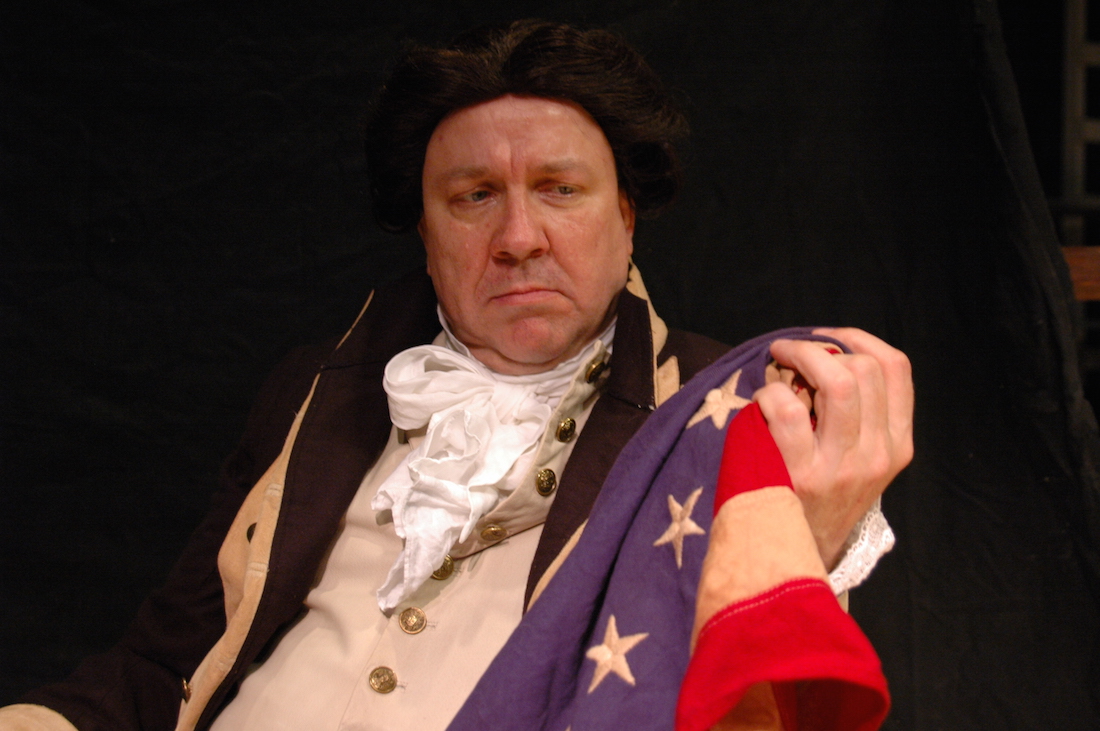
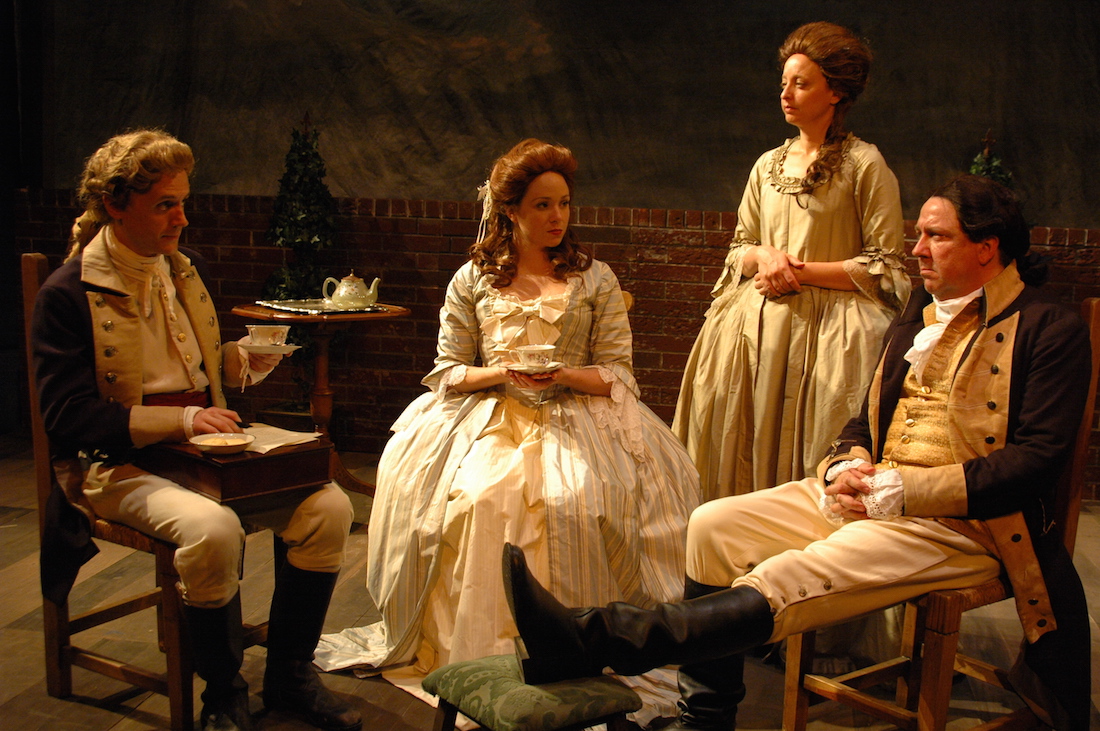
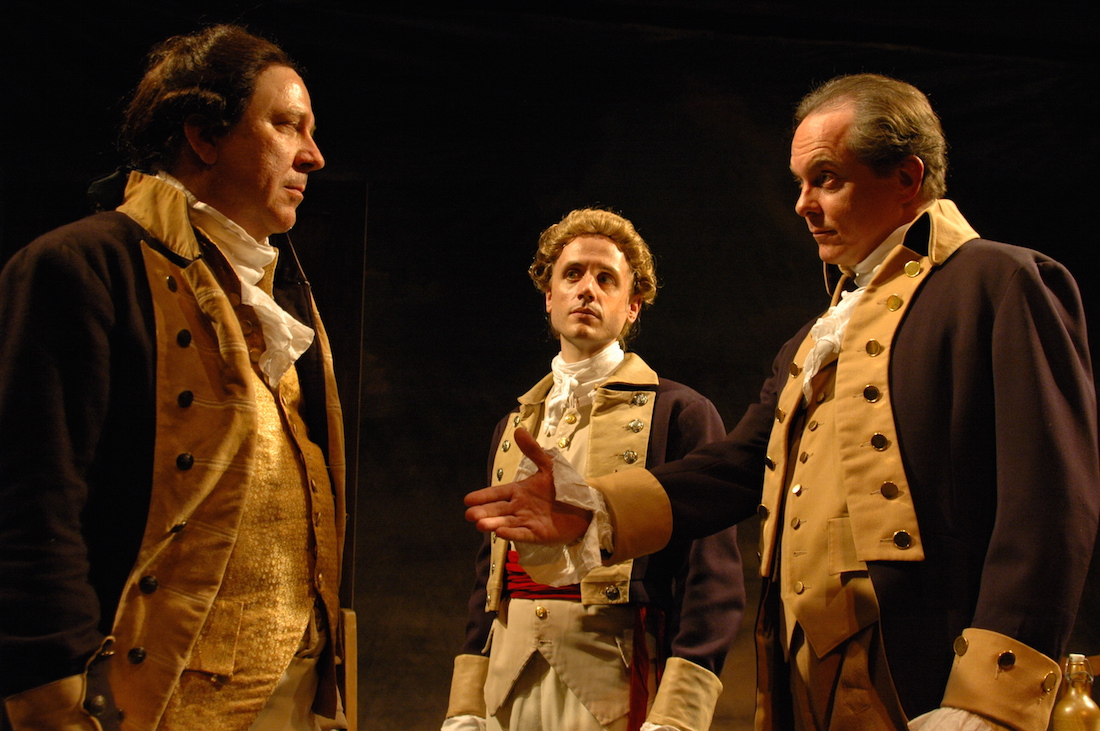
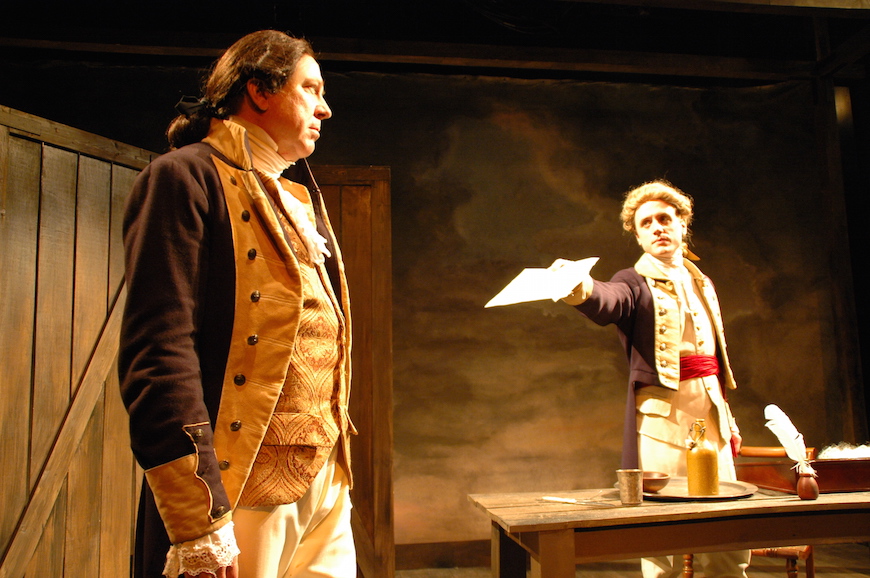
(TH) Benedict Arnold was a traitor; that's undisputed. The thing that interests me is why. Each morning when our feet hit the floor we are faced with hundreds of choices. Some we don't even think about; we just react. Others are very deliberate and considered. Depending on the outcome of those choices we can be perceived as being the good guy or the bad guy at any given moment. Many historians say that if the bullet that shattered Arnold's thigh at Saratoga had entered his heart, he would be considered one of America's most honored heroes. We live and die by our choices. To us, George Washington is a great hero, the father of our country. To the British, he was the traitor. It's all about the choices we make and how those choices are perceived. There's a little bit of George Washington and Benedict Arnold in all of us. It's a very delicate balance.
(PP) Having worked with you on a few shows in the last couple years, I've already noticed that you seem to be approaching The General from America in a different way from your previous roles. How has your preparation changed to play Benedict Arnold?
(TH) For me, every show has its demands and priorities. I'll approach each production slightly differently depending on where I believe I need to be and how I need to get there. Thank God, I don't have to do that alone. The director, the other actors, the dramaturg, the designers and many others are there to help.
I do like to do as much research as possible. That also depends on how much time I have.
Ultimately I have to live in the world of the play. And when you do a play with characters who actually lived and situations that actually happened, obviously there is going to be a certain amount of artistic
license taken. I love this time period and find the Revolutionary War very dramatic. But there comes a time in the process where you have to let go of all that information and simply live in the play. It may not be exactly how it happened, but that's usually not the point the author is trying to make.
For this production I read a lot, watched documentaries,
gleaned what I believed would be useful—and let everything else go. There have been other times when all I had time to do was to learn the lines and get out there and do the best I could.
(PP) This play marks your third time working with director Lou Contey. Why do you like working with him?
(TH) I love Lou. He's a very smart man. He's very flexible when it comes to working with actors who have very different approaches. I never feel he's dictating to the actors but rather asking questions that prompt you to discover choices you may have never considered. He knows when to ease up and when to put the pedal to the metal, so to speak. He's always willing to let the actors try their ideas. Sometimes he's inspired by that and begins to riff on our ideas. At other times he very diplomatically steers you in other directions. So many times he'll express an insight very off-handedly, and the light bulb just goes on in the actor's head. He's very smart, very creative and very open to try things. I love that.
(PP) I must admit that I didn't know that much
about Benedict Arnold except the simple phrase that
we all learned in our 6th-grade social-studies class:
Benedict Arnold was a traitor. What do you hope people
gain from seeing this play, to better understand this
man?
(TH) He's human. He's really no different than you or I. He made the mother of bad choices, and that's all that most people know about him. But in the early years of the war he was considered by George Washington to be the finest field general in the army. The man was fearless. Unfortunately he painted himself into a corner because of his pride. He felt that because of the sacrifices he made he was entitled to certain things, and his moral insight became clouded. We've all been there, to a greater or lesser extent. We've all been tested. Sometimes we make the right choice, sometimes not. The important thing is to learn, not only from our mistakes but by
examining the choices of others. We really don't have to keep making the same mistakes. That's easier said than done, however.
(PP) Do you think the play aims to explain or make excuses for Arnold's actions?
(TH) No one can truly get inside the head of another person. All you can do is examine the facts presented and make your best educated guess. I think the playwright, Richard Nelson, does that admirably. I certainly don't think he's making excuses for Arnold. He did what he did, and he had to live with that. Even in Britain Arnold was never truly respected for what he did because the plan failed.
If Arnold's plan had succeeded, who knows?
(PP) What's next for you?
(TH) I'm going to be playing Cardinal Richelieu in Chicago Shakespeare's new musical of The Three Musketeers, which I'm very excited about. I've wanted to work there for some time, and finally the time was right. Then, shortly after that closes, I'll be back at TimeLine in George Bernard Shaw's Widowers' Houses—acting with you once again. I've never done a Shaw play, so I'm really looking forward to it. I get to play a character named Lickcheese. How exciting is that? If you just say "Lickcheese,” you get a lot of insight into who this person is.
|